Half-Day vs Full-Day Fishing Charter: The Quick Answer
A half-day fishing charter typically runs 4-5 hours, while a full-day trip usually lasts 7-10+ hours. Exact schedules vary by operator, and advertised time generally includes boarding, safety instructions, travel, and the return run.
When Four or Five Hours Is Enough
Choose a half-day trip when productive inshore water is close to the dock, your goals are casual, or your group includes children and first-time charter guests. A 4-hour fishing trip can work well for casting shorelines, fishing reefs near port, or targeting a local bite without committing the entire day.
It is also the practical choice when heat, motion sickness, fatigue, or vacation plans limit your schedule. Ask the captain how much actual fishing time to expect after travel.
When Seven to Ten Hours Is Worth It
Consider a full day when reaching offshore grounds requires a long boat run, your target species demands searching, or the crew may need to try several locations and techniques. Extra hours provide flexibility if tides, currents, weather, or the peak bite window changes.
An 8-hour fishing trip costs more and demands greater stamina, but it can open access to distant water. It creates more opportunity, not a guarantee of more fish.
Half-Day and Full-Day Charters Compared
Duration, Range and Fishing Options
| Factor | Half-day charter | Full-day charter |
|---|---|---|
| Advertised duration | Usually 4-5 hours | Usually 7-10+ hours |
| Travel range | Nearby bays, reefs, flats, or coastal water | More distant grounds, including offshore areas when conditions allow |
| Actual fishing time | Can be efficient when fish are close to port | More total fishing time, but longer boat runs may consume several hours |
| Techniques | Casting, trolling, drifting, bottom fishing, or live-bait fishing near port | Greater opportunity to switch techniques, depths, and locations |
| Target options | Species available within a practical short-trip radius | Wider selection when target species require distance, searching, or specific habitat |
| Schedule | Morning or afternoon departures often fit around other plans | Usually occupies most of the day |
A morning charter may offer cooler temperatures or calmer conditions, while an afternoon charter can line up better with certain tides or bite windows. Neither departure is universally better. Ask the operator which option currently matches local conditions and your target species.
Flexibility, Fatigue and Best-Fit Groups
A half day is often the comfortable choice for families, children, first-time guests, and anyone unsure about motion sickness. It also leaves room for travel, meals, or other vacation activities. The tradeoff is less time to recover if the first location is slow or weather forces a change in plans.
A full day gives the charter captain more room to adjust locations, techniques, and timing. That flexibility can matter for experienced anglers pursuing a specific species or groups willing to spend more time running offshore. Longer trips also mean more sun, physical effort, food and water needs, and possible seasickness.
Extra hours create more opportunities, not guaranteed catches. Choose based on the distance to productive water, your group’s stamina, and the kind of fishing you want - not duration alone.
Advertised Trip Length vs Actual Fishing Time
Where the Charter Hours Go
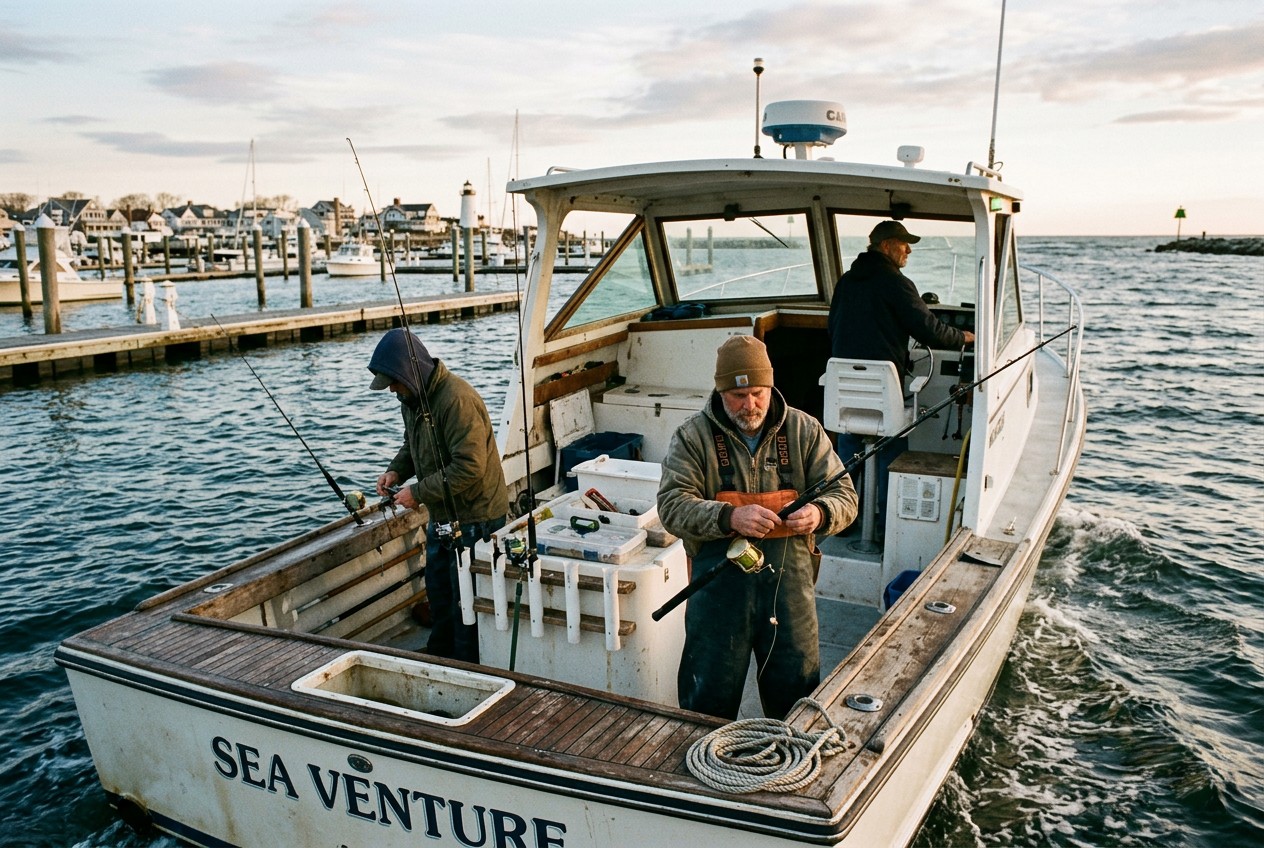
A charter’s advertised duration starts at the scheduled departure and usually ends when the boat returns to the dock. It does not mean four or eight straight hours with lines in the water.
Part of the trip may include:
- Boarding and storing personal gear
- A safety briefing from the captain or crew
- Rigging rods, preparing bait, and explaining techniques
- Running to and between fishing locations
- Pulling lines and returning to the dock
- Unloading the catch and equipment
Arrive at the requested check-in time. A late passenger can reduce usable fishing time for everyone, especially on an open-party boat.
Why Fishing Range Matters
Two advertised 4-hour trips can provide very different experiences. If productive inshore fishing begins 15 minutes from the marina, you may spend much of the trip casting, trolling, or drifting. If the intended grounds require a 60-minute run each way, two hours may be consumed by travel alone.
Offshore distance is not the only factor. No-wake zones, inlet conditions, boat speed, sea state, and stops for live bait can also affect travel time. Ask the operator for a realistic range based on the current plan, not just the boat’s maximum cruising speed.
The 80/20 Fishing Rule
Some anglers use an informal 80/20 rule when estimating charter value: roughly 80 percent fishing and 20 percent preparation and travel. Treat that as a planning shortcut, not a promise. A nearby inshore trip might beat that ratio, while a full-day offshore run could devote a much larger share to travel.
Before booking, ask, “On a typical trip like this, how long are lines actually in the water?” The captain’s estimate should account for the target species, fishing grounds, bait stops, weather conditions, and return run.
Match Trip Length to Species, Conditions and Bite Windows
Target Species and Distance to the Fishing Grounds
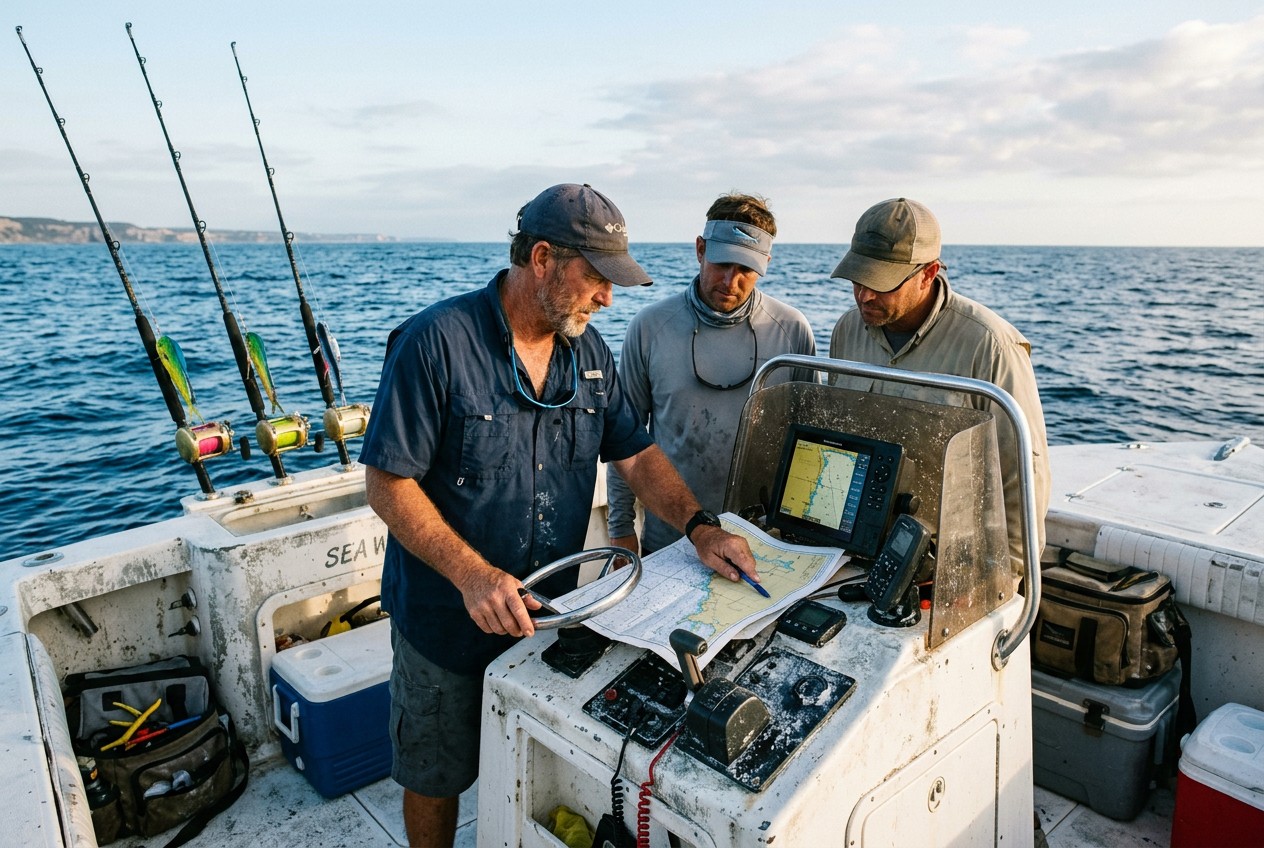
Start with the species and method, then consider the clock. A half-day charter can be plenty when the crew can reach productive flats, jetties, reefs, or nearshore structure within 15-30 minutes. Casting, drifting, trolling, and bottom fishing near port all make efficient use of a short trip.
A full day becomes more practical when the target requires a 60-90 minute offshore run, extensive trolling, deep-water drops, or searching several areas. Those extra hours allow the captain to relocate or change techniques if the first plan falls flat. They provide flexibility, not a catch guarantee.
Ask how far the likely grounds are from the dock and how much time the chosen method typically requires. Also confirm current seasons and bag limits with the operator and the relevant official state wildlife agency.
Tides, Weather and Changing Sea Conditions
Tide stages and currents can shift feeding activity, boat positioning, and which locations are safely fishable. Strong current may make bottom fishing difficult, while weak movement can slow a bite that depends on moving water.
Wind and rough seas can reduce cruising speed, extend travel time, or force the captain to use protected water. Heat also matters. Eight hours in direct summer sun can wear down children and guests who are not accustomed to being offshore.
A longer trip gives the crew more time to wait for a favorable tide or changing bite window. However, poor sea conditions may make the extra hours less comfortable rather than more productive.
Morning vs Afternoon Half-Day Charters
Morning trips often offer cooler air, lighter winds, and an earlier return. Afternoon trips may fit vacation schedules better and can align with a favorable tide or late-day feeding period.
There is no universal rule that morning fishing is better. Local wind patterns, water temperature, current, boat traffic, and target species all influence the peak bite window. Ask the operator which departure currently provides the best combination of fishing opportunity and group comfort.
Private Charters vs Open-Party Fishing Boats
Control, Pace and Instruction
A private fishing charter gives your group the whole boat. You can usually discuss target species, techniques, fishing locations, breaks, and the amount of instruction with the captain. That control suits families, anglers learning a specific method, and experienced groups with a focused plan.
An open-party fishing boat sells individual spots. The per-person fare is often lower, but the crew must manage anglers with different skill levels and goals. Fishing locations, departure times, and techniques follow a shared plan rather than one group’s preferences.
| Factor | Private charter | Open-party boat |
|---|---|---|
| Cost structure | One price for the boat or group | Fare charged per passenger |
| Pace | More adaptable to your group | Set for the full passenger list |
| Instruction | Easier to personalize | Shared among multiple anglers |
| Rail space | Limited to your party | Shared or assigned |
| Location choice | More group input may be possible | Captain follows the boat-wide plan |
Passenger Minimums and Usable Fishing Time
Ask about maximum capacity, minimum passenger requirements, and what happens if an open-party trip does not meet its booking threshold. Also confirm whether the boat boards on a first-come basis or assigns fishing positions.
A larger passenger list can mean longer boarding, tackle setup, fish handling, and tangle clearing. Some boats rotate anglers through preferred stern or corner positions, while others keep everyone at an assigned rail spot. Neither system is automatically better, but it changes how you fish.
For a fair comparison, divide the complete cost by your group’s size and ask how much actual fishing time is typical. Choose private for control and focused instruction. Choose open-party when lower per-person cost matters more than personalization.
Calculate the Total Cost and Check What Is Included
Fare, Gear, Bait and Possible Extra Charges
Compare the complete trip cost, not just the advertised fare. A longer charter may include more fuel or bait, while a lower-priced open-party ticket may leave several items to be paid at check-in.
Confirm these details before booking:
- Base fare and required deposit
- Rods, reels, terminal tackle, and tackle rental
- Live, frozen, or artificial bait
- Fuel surcharge
- Parking or marina fees
- Food, drinks, ice, and onboard storage
- Fish cleaning, filleting, bagging, or icing
- Charges for lost or damaged equipment
- Taxes, booking fees, and accepted payment methods
Ask whether fish cleaning is included, priced separately, or handled by an independent service at the dock. Also check what happens to the cost if weather shortens the trip or the captain changes the fishing plan.
Licenses, Seasons and Bag Limits
Do not assume the boat’s license covers every passenger or fishing location. Requirements can differ between private charters, open-party boats, freshwater trips, saltwater trips, and waters crossing state or federal boundaries.
Ask the operator whether you need an individual fishing license and where to purchase it. Then verify current seasons, bag limits, size limits, protected species, and possession rules with the relevant official state wildlife agency. Regulations can change, so check shortly before departure rather than relying on an older trip report or social media post.
Charter Gratuity and Crew Service
Ask whether gratuity is already included in the fare. If it is not, many charter guests use 15-20 percent of the trip price as a starting point, adjusting for the level of service and local custom.
Base the tip on the crew’s work, not only the catch. Good service includes clear instruction, safe boat handling, baiting hooks, untangling lines, moving between spots, helping children, handling fish, and keeping the deck organized. A slow bite can happen even when the captain and crew work hard. If unsure, ask the operator how gratuities are normally handled and whether cash is preferred.
Questions to Ask Before Booking and FAQ
What Should You Confirm With the Captain?
Before paying a deposit, ask:
- What are the exact departure, check-in, and return times?
- How long is the likely run to the fishing grounds?
- Which species and fishing methods are realistic for this trip?
- Are rods, tackle, bait, ice, and fish cleaning included?
- Do passengers need individual fishing licenses?
- Is there a minimum number of passengers?
- What food, drinks, coolers, and alcohol are permitted?
- Who decides when weather conditions require cancellation or rescheduling?
- What does the charter cancellation policy cover?
- What motion sickness precautions does the operator recommend?
Is a Half-Day Charter Long Enough for Offshore Fishing?
Sometimes. Offshore suitability depends on the port, distance to productive water, boat speed, sea conditions, and target species. A fast boat leaving from a port close to deep water may offer useful offshore fishing during a 4-5 hour trip. From another marina, the same duration could leave little time after a long run.
Ask for the expected travel time each way and estimated time with lines in the water. Local guidance matters more than the offshore label.
How Long Are Charters, How Much Should You Tip and Which Trip Is More Comfortable?
Half-day charters generally last 4-5 hours. Full-day trips commonly run 7-10+ hours, although schedules vary by operator.
If gratuity is not included, 15-20 percent is a common starting point. Consider the crew’s safety, instruction, effort, and service rather than catch totals alone.
A half day is usually easier for children, first-time guests, and anglers concerned about heat, fatigue, or motion sickness. A full day better suits distant grounds and focused fishing goals. Choose according to travel distance, target species, and your group’s stamina.
Boating safety: Follow all instructions from the captain and crew, attend the safety briefing, and use a properly fitted life jacket whenever required or recommended, especially for children and during offshore or rough-water trips.
Heat and sun: Bring adequate drinking water, sun-protective clothing, a hat, and water-resistant sunscreen. Tell the crew immediately if you experience dizziness, weakness, confusion, severe nausea, or other signs of heat illness.
Motion-sickness medication can cause drowsiness and may interact with alcohol, other medicines, or certain medical conditions. Follow the product label and consult a healthcare professional if you are pregnant, have a medical condition, or take other medication.
Food safety: Keep retained fish properly chilled, follow the operator’s handling instructions, and check applicable local fish-consumption advisories before eating your catch.
Fishing and boating rules vary by location and can change. Verify current licenses, seasons, size and bag limits, protected-species rules, and possession requirements with the responsible government agency before departure.
Sources and verification
- National Weather Service marine forecasts provides official coastal and offshore forecast links.
- USCG life-jacket guidance supports checking approved, properly fitted flotation devices.
- NOAA Fisheries fishing resources routes readers to current federal and state fishing-rule sources.
These sources support the weather, flotation and fishing-rule context above. They do not validate a trip duration, price, gratuity amount, operator, vessel, availability or outcome. Any dollar or percentage examples in this article are manually maintained editorial reference arithmetic, not official data or measured market statistics.