What Does a Fishing Charter Cost?
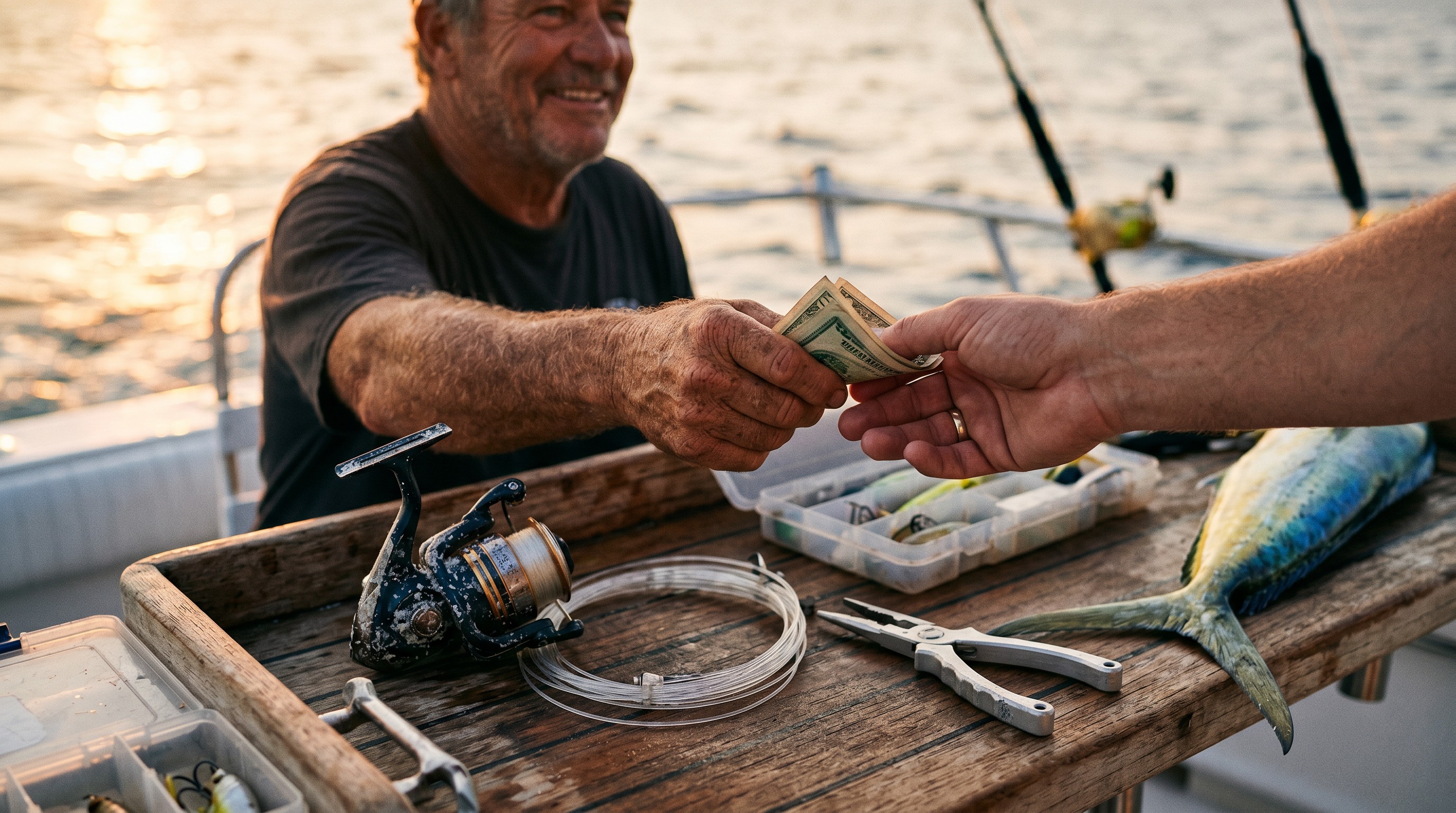
A fishing charter can cost about $350 for a short freshwater trip, while a long offshore fishing charter may exceed $4,000. Between those ends, many half-day inshore trips fall in the high hundreds, and full-day or deep sea fishing trips often reach four figures.
Treat these numbers as planning ranges, not guaranteed prices. Location, trip length, boat size, fuel use, target species, season, and crew structure all affect the quote. The advertised rate may also exclude a fuel surcharge, fishing licenses, additional angler fees, parking, fish cleaning, food, and crew gratuity.
Use the fishing charter cost calculator to combine the advertised boat price, mandatory fees, licenses, add-ons and crew tip into one group total and per-person budget.
Private Boat Rates vs Per-Person Fares
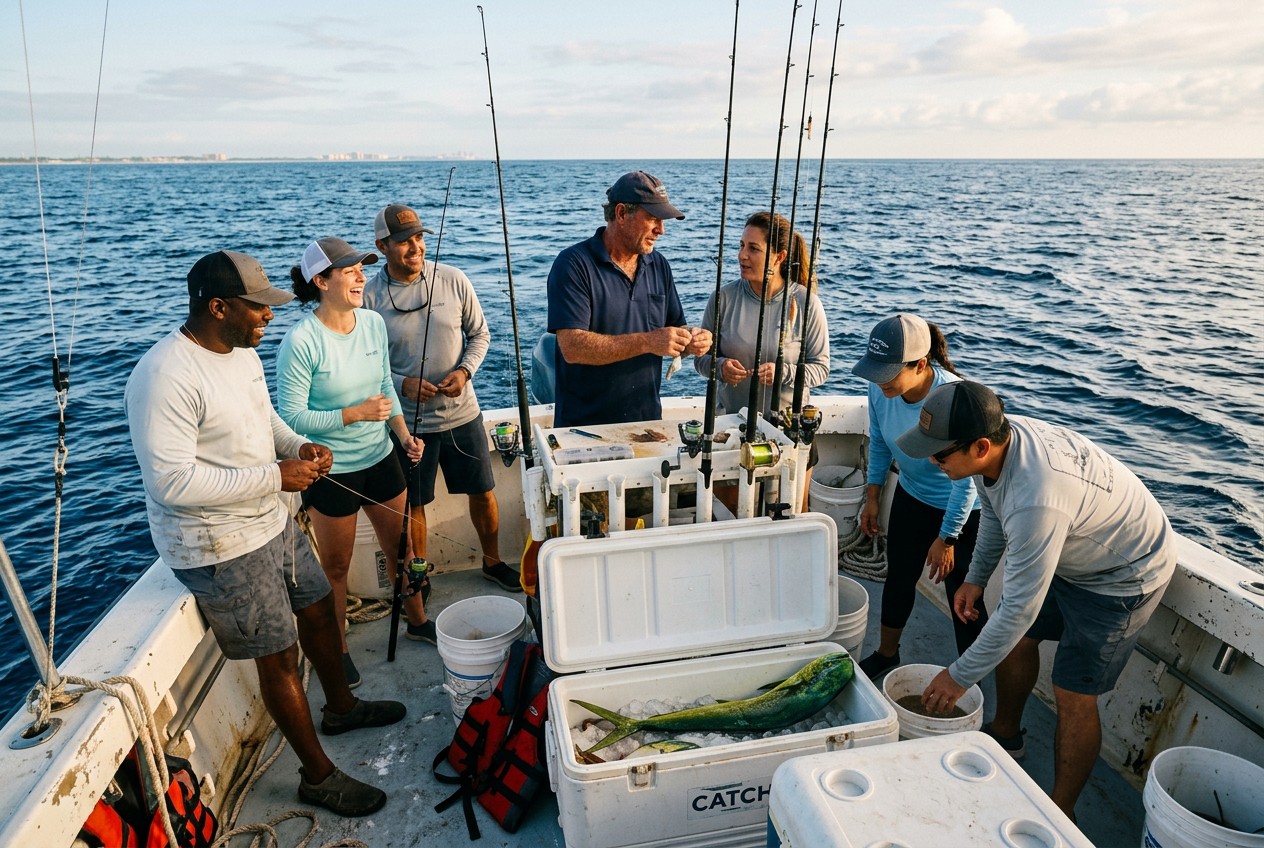
A private fishing charter usually charges one group rate for the boat and includes a stated number of passengers. For example, a rate might cover four anglers, with each additional angler charged separately up to the operator’s fishing limit and legal boat capacity.
A shared charter or party boat sells individual seats. This can reduce the fishing charter cost per person, especially for solo anglers or couples, but you share space and have less control over the schedule and target species.
Before booking, ask whether the quote is per boat or per seat and request the estimated total with all required charges included.
Average Fishing Charter Costs by Trip Type and Length
These broad US planning ranges help compare trip types, but they are not guaranteed quotes. Actual rates depend on location, season, boat specifications, trip length, crew, and fuel policy.
| Trip type | Common duration | Typical private boat range |
|---|---|---|
| Freshwater | 4-6 hours | $350-$750 |
| Freshwater | 8 hours | $600-$1,200 |
| Inshore | 4-6 hours | $500-$1,000 |
| Inshore | 8 hours | $900-$1,600 |
| Nearshore | 4-6 hours | $650-$1,300 |
| Nearshore | 8 hours | $1,100-$2,000 |
| Offshore or deep sea | 8-12 hours | $1,500-$4,000+ |
Freshwater, Inshore and Nearshore Charter Prices
A half-day freshwater charter is often the least expensive private option. Smaller boats, shorter runs, and lower fuel use usually keep costs down. Full-day trips cost more but give the captain time to fish several areas or adjust when weather and fish behavior change.
Inshore fishing generally takes place in bays, sounds, flats, rivers, or close to the coastline. Nearshore trips run farther to reefs, wrecks, or other coastal structure. That additional distance, along with a larger boat in some locations, can push nearshore prices above comparable inshore rates.
Offshore Fishing Charter and Deep Sea Fishing Prices
Offshore trips commonly last 8-12 hours, and specialized outings may run longer. Higher prices reflect fuel consumption, larger boats, heavier rods and reels, offshore safety equipment, bait, and sometimes a captain-plus-mate crew.
Travel time matters. A four-hour booking with a 60-minute run each way leaves roughly two hours near the fishing grounds. An eight-hour trip costs more, but the same two-hour round trip could leave about six hours for locating fish, setting lines, and moving between spots.
How to Read the Cost Comparison Table
Compare each quote using four numbers:
- Total boat cost, including required fees.
- Booked hours, measured from departure to return.
- Estimated fishing time after the run to and from the grounds.
- Expected group size, including any additional angler fee.
A $1,200 trip for six anglers equals $200 per person before extras. A $900 trip limited to four costs $225 each. Confirm passenger limits, included services, and current fishing rules with the operator, then check licenses, seasons, and bag limits through the relevant state wildlife agency.
Private and Shared Fishing Charter Cost per Person
Calculating a Private Charter’s True Per-Person Cost
Use this formula:
(Base group rate + additional angler fees) / number of paying anglers = cost per person before other extras
Suppose a private charter costs $900 and includes four anglers. The operator permits six anglers and charges $75 for each person above four.
- Four anglers: $900 / 4 = $225 per person
- Five anglers: ($900 + $75) / 5 = $195 per person
- Six anglers: ($900 + $150) / 6 = $175 per person
Adding people can lower each angler’s share, but only if the boat can fish the group comfortably. Fuel surcharges, licenses, gratuity, parking, and fish cleaning should be added separately when calculating the complete trip budget.
When a Shared Fishing Charter Costs Less
A shared charter or party boat charges by the seat. If a seat costs $150, two anglers pay $300 instead of covering an entire private boat rate. This model often works well for solo travelers, couples, and anyone with flexible plans.
The tradeoff is control. The operator sets the departure time, fishing grounds, target species, and fishing style. You may also have less rail space, storage, and one-on-one time with the crew. Confirm whether rods, bait, tackle, licenses, and fish cleaning are included in the fare.
Passenger Limits and Boat Capacity
Legal boat capacity is not always the same as the operator’s practical fishing limit. A vessel may legally carry six passengers but fish most effectively with four because casting room, seating, gear storage, and the chosen technique require space.
Before comparing quotes, ask for the maximum number of anglers, not simply passengers. Also confirm the included passenger allowance and every additional angler fee. Check current license requirements and fishing rules with the operator and the relevant state wildlife agency.
What Is Included, and What Costs Extra?
Commonly Included Equipment and Services
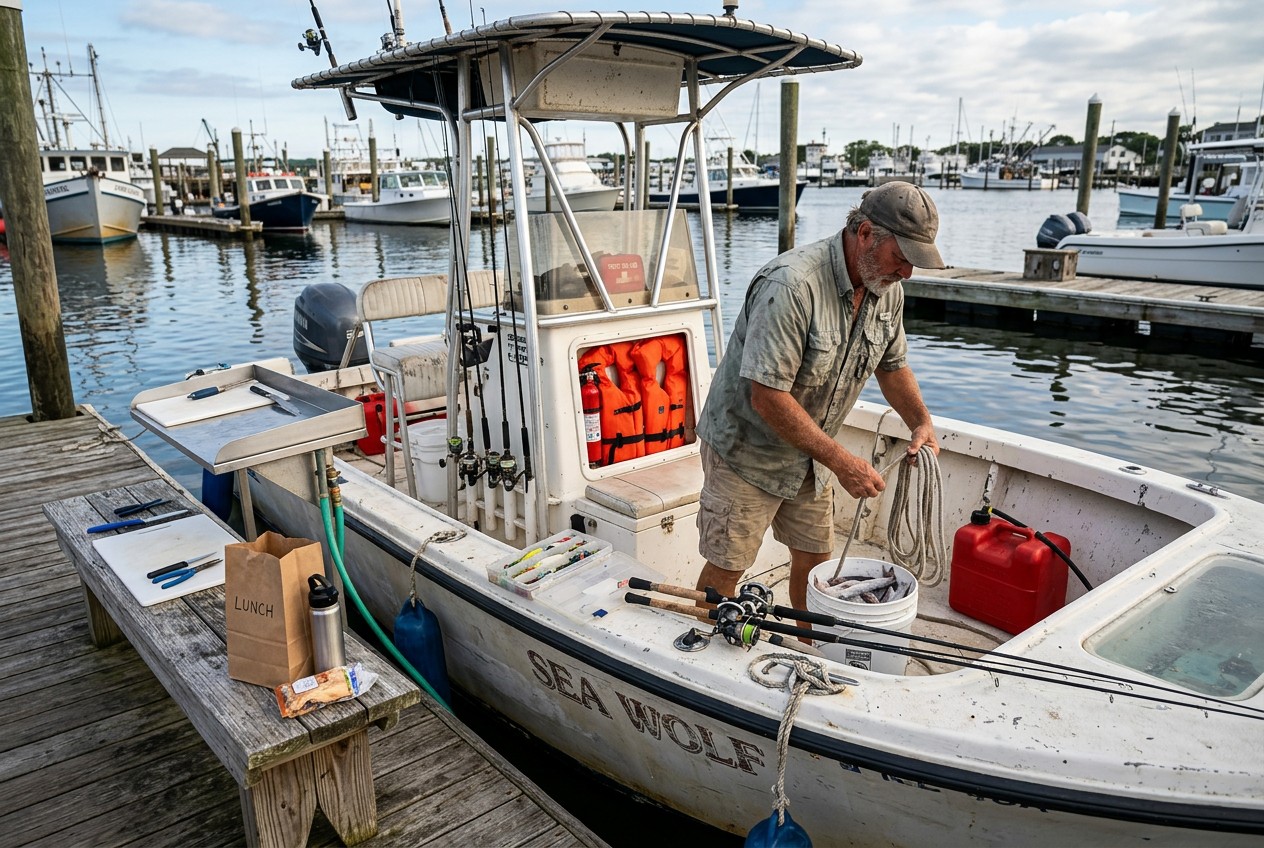
Most private charter rates cover the boat, charter boat captain, required safety equipment, and fuel for the standard trip plan. Many operators also provide:
- Rods and reels suited to the target species
- Bait, lures, hooks, leaders, and basic tackle
- Ice for the catch and sometimes a cooler for drinks
- Basic instruction on rigging, casting, and fighting fish
- Local knowledge, navigation, and help handling the catch
Inclusions vary. Premium live bait, specialized tackle, lost equipment, or gear damaged through misuse may cost extra. Fish cleaning is sometimes included, sometimes charged by the fish or pound, and sometimes handled by a separate service at the dock.
Possible Add-On Charges
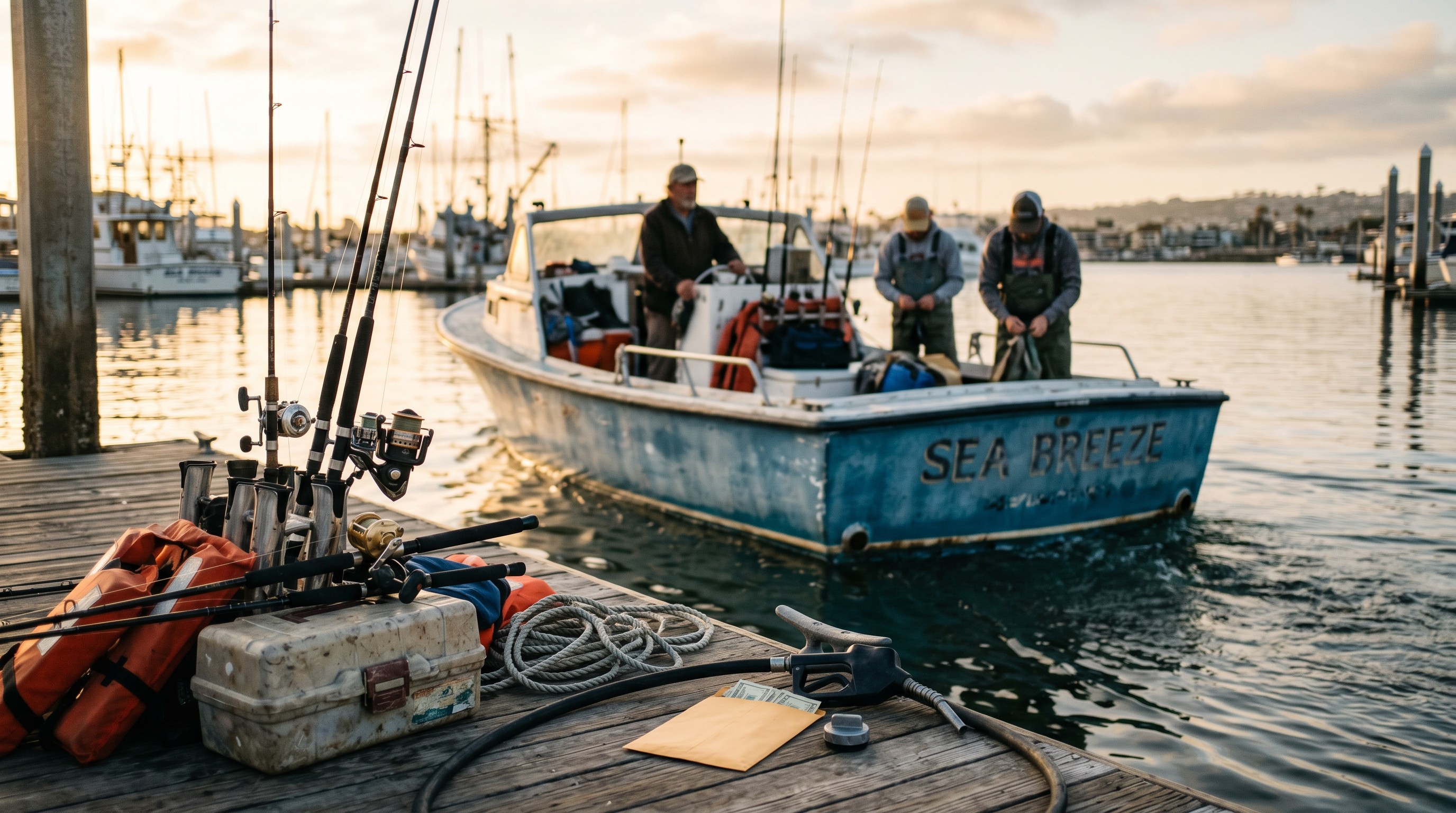
Ask the operator to identify every required charge before paying the charter deposit. Common extras include:
- Additional angler fee when the group exceeds the number included in the base rate
- Fuel surcharge for long runs, changing fuel prices, or trips beyond the standard fishing area
- Fishing license if the charter does not provide coverage under its license
- Fish cleaning, filleting, or packaging
- Parking, marina, or launch fees
- Meals, beverages, and snacks
- Optional equipment or services, such as premium bait or catch shipping
- Crew gratuity, which is usually separate from the advertised rate
License requirements vary by state, water, species, and charter type. Confirm current requirements with the operator and the relevant official state wildlife agency.
A Realistic Total-Budget Formula
Use this calculation before comparing quotes:
Advertised rate + added anglers + fuel surcharge + licenses + fish cleaning + parking + food and drinks + gratuity = total trip budget
Then calculate:
Total trip budget / number of paying anglers = true cost per person
For example, consider a hypothetical $900 charter for four anglers. Add $100 for fuel, $40 for parking and food, $60 for cleaning, and $180 for gratuity:
$900 + $100 + $40 + $60 + $180 = $1,280 total
Divided among four paying anglers, the trip costs $320 per person. If licenses or extra-passenger fees apply, add them before dividing. Request a written estimate so every quote reflects the same group size, trip length, services, and required charges.
Why Fishing Charter Prices Vary
Trip Length, Distance and Fuel Use
A half-day charter costs less than a full-day trip, but the cheaper booking may provide much less fishing time. If offshore grounds are 30 miles from the dock and the boat needs 90 minutes each way, a six-hour trip leaves about three hours for setting lines, finding fish, and making moves. On a 10-hour trip, that same run leaves roughly seven hours.
Cruising distance also affects fuel consumption. Some operators include normal fuel use in the base rate, while others apply a fuel surcharge for distant grounds or extended runs. Ask whether booked time begins at dock departure and how much of the trip is typically spent traveling.
Boat Size, Crew and Target Species
Larger boats usually burn more fuel and carry more expensive engines, electronics, safety equipment, and maintenance costs. They may also provide greater range, weather protection, cabin space, and comfort.
Crew structure matters too. A captain-only inshore boat generally has lower staffing costs than an offshore boat carrying both a charter boat captain and first mate. Target species can change the quote because trolling, kite fishing, deep dropping, or fishing with live bait may require specialized rods, reels, tackle, bait systems, and additional preparation.
Season, Location and Local Rules
Prices often rise during peak tourism periods, popular fishing seasons, weekends, and tournaments when demand is strong. Marina costs, local fuel prices, travel distance, and regional operating expenses also explain why similar-looking trips can carry different rates.
Never assume that a higher price guarantees a specific catch. Fish movement, weather, water conditions, and fishing pressure all affect results. Seasons, fishing licenses, bag limits, size limits, and access rules vary by state, species, and water. Confirm current trip availability and policies with the operator, then verify regulations through the relevant official state wildlife agency before departure.
Tips, Deposits and Questions to Ask Before Booking
How Much Should You Tip a Fishing Charter Crew?
A common planning range for crew gratuity is 15-20% of the charter price, adjusted for service, effort, and local custom. On a $900 trip, that means budgeting about $135-$180.
For a captain-only trip, give the tip directly to the captain. When a first mate handles bait, tackle, lines, fish care, and cleaning, ask whether gratuities are shared or should be handed to the mate. Do not assume a tip is included in the advertised rate.
Deposits, Cancellations and Bad Weather
Before paying a charter deposit, get these answers in writing:
- How much is the deposit, and when is the balance due?
- Is the deposit refundable if the customer cancels?
- Are cancellations allowed within a stated number of days?
- What happens after a no-show or late arrival?
- Who makes the final weather decision?
- Does a weather cancellation result in rescheduling, credit, or refund?
- What happens if the captain shortens the trip after departure?
Light rain or moderate wind may not automatically cancel a charter. The captain evaluates safety, sea conditions, and the boat’s capabilities. Confirm the operator’s policy instead of relying on a general forecast.
Fishing Charter Booking Checklist
Use one checklist for every quote:
- Private boat rate or per-person fare
- Number of anglers included and additional angler fee
- Legal boat capacity and practical fishing limit
- Exact departure location and check-in time
- Booked duration and expected travel time
- Fuel included or subject to a surcharge
- Bait and tackle included
- Rods and reels provided
- Fishing license coverage confirmed
- Fish cleaning, filleting, and packaging fees
- Deposit, cancellation, rescheduling, and refund terms
- Estimated total with gratuity, parking, food, and required extras
Verify current license requirements, seasons, bag limits, size limits, and access rules with the operator and the relevant official state wildlife agency before the trip.
Fishing Charter Cost FAQ
Are Fishing Charters Priced per Person or per Boat?
Private charters usually charge a group rate covering a set number of anglers. Additional passengers may trigger an extra fee. Shared charters and party boats generally sell individual seats. Confirm the included headcount, practical fishing limit, and complete price before comparing options.
How Much Should You Tip on a Four-Hour Fishing Charter?
Budget about 15-20% of the charter price when service meets expectations. A $600 trip would mean roughly $90-$120. Trip length matters less than crew effort and service. Ask whether the captain shares gratuity with a first mate or if you should tip the mate directly.
Why Do Offshore Trips Cost More, and How Can You Save?
Offshore boats often use more fuel, carry specialized tackle and safety equipment, travel farther, and employ both a captain and mate. Save by sharing a charter, filling the included passenger allowance, and choosing a trip length suited to the fishing grounds. Compare complete quotes, including fuel, licenses, cleaning, and gratuity.
Verify current charges with the operator.
Safety requirements and charter regulations vary by vessel, route, and jurisdiction. Before booking, verify the operator’s required credentials, passenger-for-hire authorization, vessel compliance, emergency equipment, and properly sized life jackets.
Marine conditions can change quickly. Follow the captain’s safety instructions and decisions about departure, route changes, trip shortening, or cancellation.
Prepare for sun, heat, spray, motion sickness, and slippery surfaces with suitable clothing, non-slip footwear, sun protection, water, and any appropriate medication. Ask a healthcare professional before using motion-sickness medicine if you have a medical condition, take other medicines, are pregnant, or are unsure whether it is safe for you.
Keep retained fish properly chilled and follow hygienic handling practices. Check official local fish-consumption advisories, especially for children, pregnant people, and anyone who may be more vulnerable to contaminants.
Sources and verification
- USCG federal recreational boating regulations provides federal recreational-boating rule and safety resources.
- National Weather Service marine forecasts provides official coastal and offshore forecast links.
- NOAA Fisheries fishing resources routes readers to current federal permit information and official state fishing agencies.
These sources support the boating-safety, weather and regulation-verification context above. They do not validate a charter rate, fee, gratuity, inclusion, operator, vessel, availability or outcome. All dollar and percentage examples in this article are manually maintained editorial reference arithmetic, not official data, booking observations or measured market statistics; replace them with a current itemized quote.