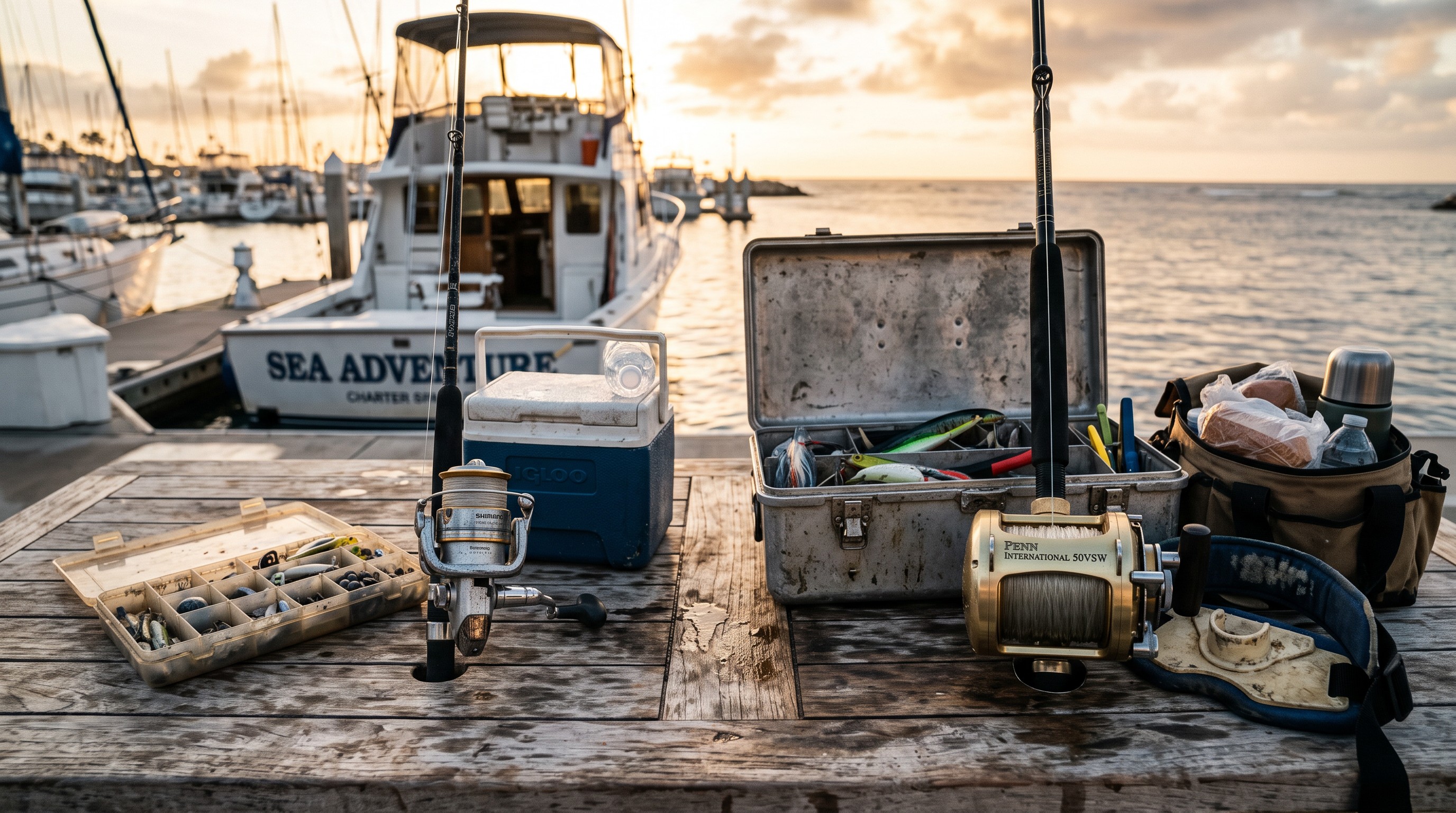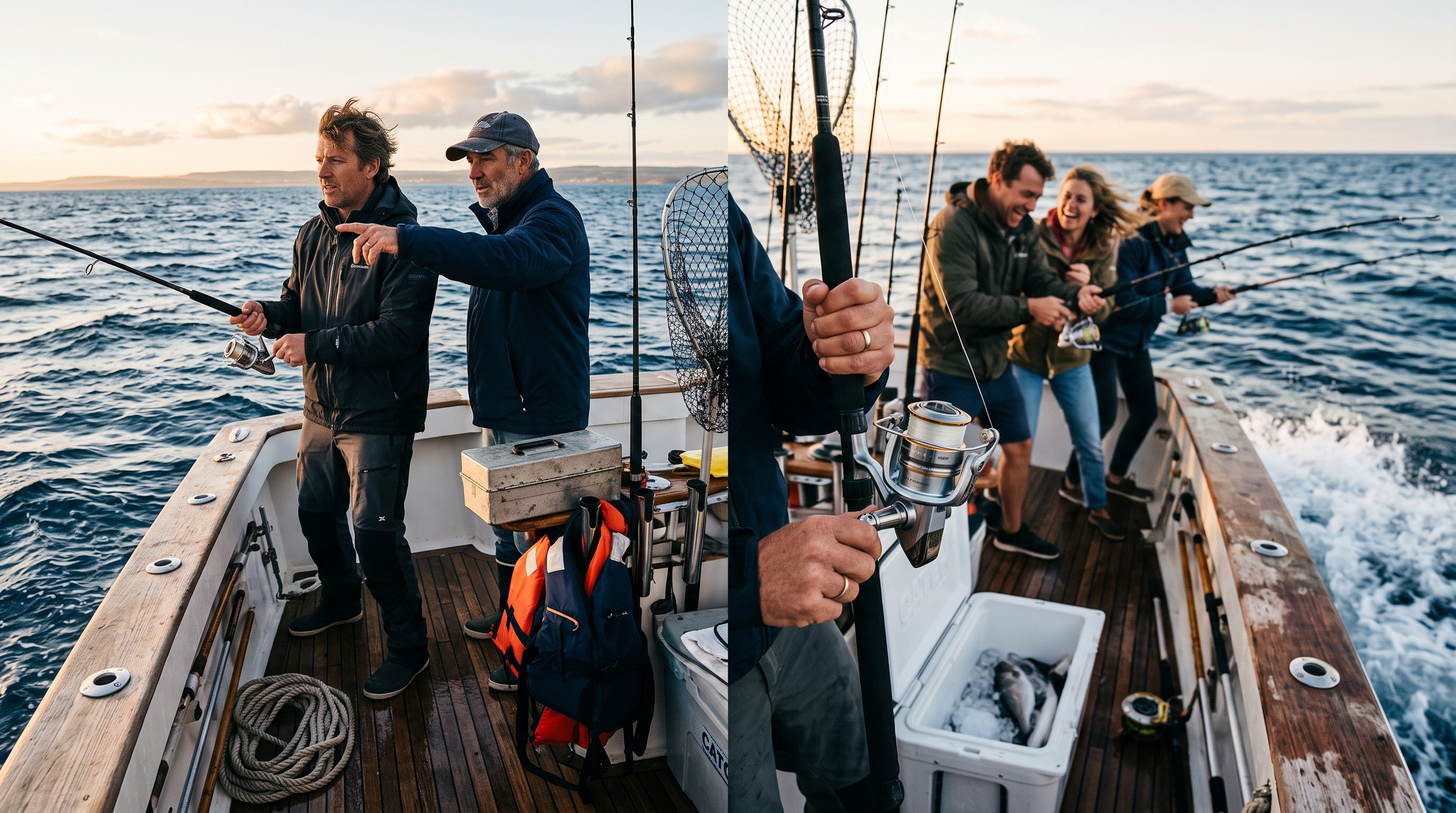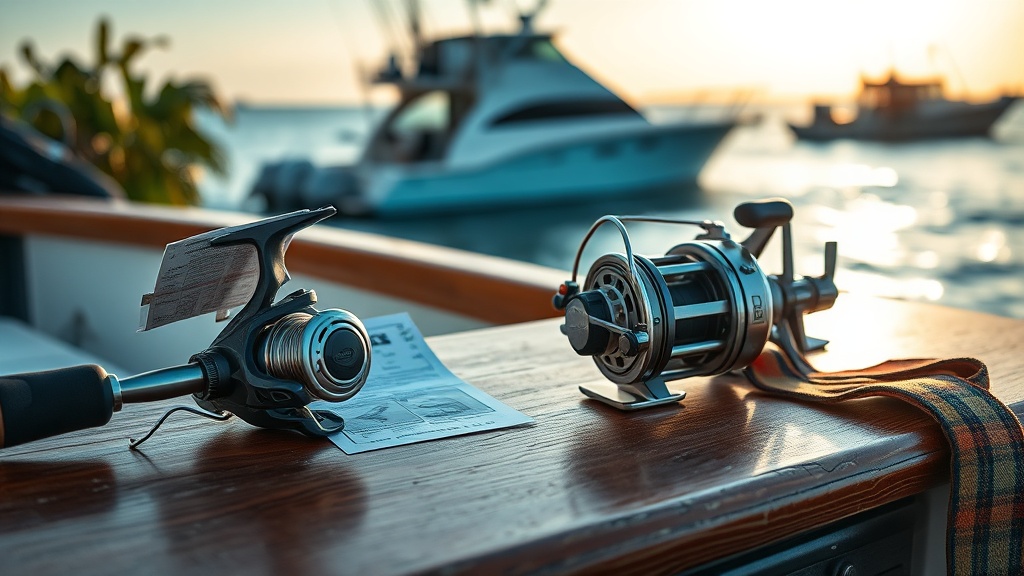
What Inshore and Offshore Fishing Actually Mean
Inshore, nearshore, offshore and deep sea definitions
Inshore fishing generally takes place in protected or partly protected waters, including bays and estuaries, flats, tidal creeks, harbors, and backwaters. Water may be only a few feet deep, and runs are often short. Anglers commonly cast light tackle around grass, docks, rocks, or current seams.
Nearshore fishing usually moves outside protected water to coastal reefs, wrecks, beaches, or structure within a manageable run of land. Conditions are more exposed than in a bay, but trips may still fit a half-day schedule.
Offshore fishing means traveling into open water to reach deeper reefs, wrecks, ledges, or pelagic fishing grounds. Trolling and bottom fishing are common, and heavier tackle may be required. Deep sea fishing is often used as a marketing term for offshore trips, not a precise depth category.
Why charter descriptions vary by region
There is no nationwide mileage or depth cutoff. A 10-mile run could reach deep, exposed Pacific water, relatively shallow Gulf water, an Atlantic reef, or an offshore Great Lakes fishing area. Local geography changes everything.
Before booking, ask the operator for specifics:
- Expected run distance and travel time
- Typical water depth
- Protected versus exposed water
- Target structure and fishing methods
- Boat type and usual sea conditions
Those details describe the trip far better than the label alone. Weather, access, and fishing rules also vary, so confirm current requirements with the operator and the relevant state wildlife agency.
Inshore vs Offshore Fishing: The Key Differences
Decision table for choosing the right trip
The practical difference is exposure and travel. Inshore trips usually keep you closer to protected water, while offshore trips trade longer runs and rougher conditions for access to deeper structure and open-water species.
| Factor | Inshore fishing | Offshore fishing |
|---|---|---|
| Location | Bays, estuaries, flats, rivers, backwaters | Open ocean, deep reefs, wrecks, ledges |
| Typical depth | Often 2-50 feet | Commonly 50 feet to several hundred feet |
| Distance from shore | Usually close, though local geography varies | Often several to dozens of miles |
| Common boat | Bay boat or smaller center console | Larger center console or offshore fishing boat |
| Trip length | Often 4-6 hours | Commonly 6-12 hours |
| Travel time | Usually shorter | Can consume several hours round trip |
| Sea conditions | More protected, but still affected by wind and current | Greater exposure to swell, wind, and changing weather |
| Tackle | Light to medium spinning or casting gear | Medium to heavy conventional or spinning gear |
| Techniques | Casting, sight fishing, drifting, live bait | Trolling, bottom fishing, jigging, live bait |
| Best fit | Limited time, tighter budget, families, frequent casting | Full-day availability, specific offshore targets, tolerance for open water |
These are planning ranges, not fixed definitions. Ask the captain for the expected run, depth, sea exposure, and actual fishing time.
Boats, tackle and fishing techniques
A bay boat offers a shallow draft, which means it can cross water that deeper boats cannot. It works well around flats, grass lines, docks, and oyster structure. Center consoles cover a broad range, from protected bays to offshore grounds, depending on size, construction, fuel capacity, and safety equipment.
Larger offshore boats generally provide more deck space, storage, freeboard, and protection from spray. They may also offer seating or a restroom, but confirm those features before booking.
Inshore anglers often cast artificial lures or live bait on 8-20 lb tackle. Offshore crews may troll, jig, or drop baits with substantially heavier line and leaders. The captain should match the equipment to the species and structure.
Fish size and target species
Offshore water can produce larger tuna, billfish, sharks, grouper, or salmon, depending on the region. That possibility is never a guarantee. Weather, migration, water temperature, bait, and fishing pressure all affect results.
Inshore fish are not automatically small. Striped bass in Northeastern bays, red drum along Atlantic and Gulf estuaries, and Chinook salmon near Great Lakes harbors can test serious tackle. Choose by habitat and technique, then verify current seasons, closures, licenses, and bag limits with the relevant state wildlife agency and charter operator.
Trip Length, Run Distance and Actual Fishing Time
How travel time changes a half-day charter
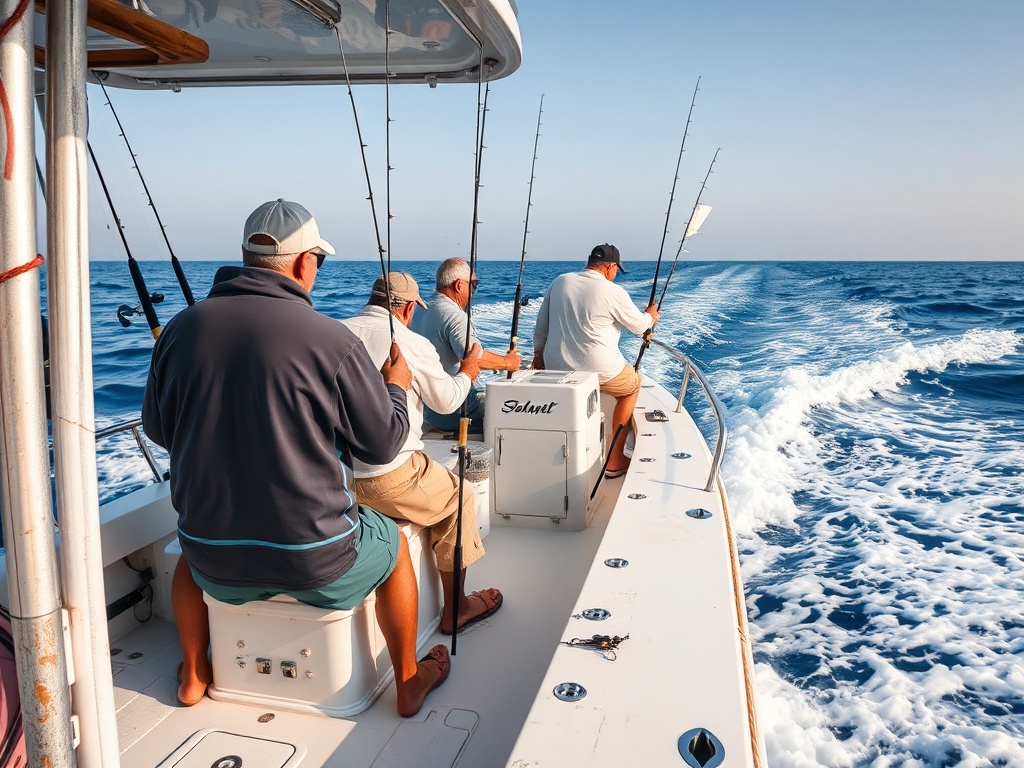
A four-hour charter includes boarding, the safety briefing, leaving the dock, travel, fishing, and the return run. It does not usually mean four full hours with lines in the water.
An inshore captain might run 3-8 miles in 15-30 minutes, leaving roughly three hours for casting, moving between spots, and handling fish. An offshore boat traveling 20 miles could spend 45-75 minutes running each way, depending on the boat, channel restrictions, wind, current, and sea conditions. On the same four-hour booking, active fishing time might fall below two hours.
Ask for estimated dock-to-spot travel time, not just distance. Ten miles across protected water can be much quicker than ten miles through an inlet and short, steep seas.
When a full-day fishing trip is worth it
A full-day trip often makes sense when the target grounds require a long offshore run or the captain expects to check several reefs, wrecks, temperature breaks, or trolling areas. Extra time also helps when seasonal fish are scattered and locating bait is part of the day.
The tradeoff is greater cost, fuel use, sun exposure, and fatigue. An eight-hour trip with a one-hour run each way may still provide about six hours near the fishing grounds. That can be far more productive than squeezing the same destination into a half-day, but larger fish and better catches are never guaranteed.
Confirm total duration, likely run time, fuel surcharges, and the weather cancellation policy before booking.
Shore, pier, kayak, private boat or charter boat
| Platform | Range and access | Main responsibility | Fishing-time impact |
|---|---|---|---|
| Shore | Beaches, banks, jetties, and public access points | Carrying tackle and checking access rules | No boat run, but walking and setup take time |
| Pier | Deeper public water without a boat | Fees, hours, crowds, and landing fish | Quick setup if parking is close |
| Kayak | Flats, creeks, and protected coastal water | Weather, safety gear, navigation, and physical effort | Launching and paddling reduce fishing time |
| Private boat | Range depends on boat, fuel, and conditions | Navigation, maintenance, tackle, and safety | Full control, but preparation can be substantial |
| Charter boat | Inshore through offshore grounds | Captain handles navigation and commonly supplies tackle | Travel is included in booked hours |
Verify licenses, access restrictions, seasons, closures, and bag limits with the official state wildlife agency. Ask the operator what is included and when the boat must be back at the dock.
Sea Conditions, Weather and Seasickness
How to read conditions for comfort and safety
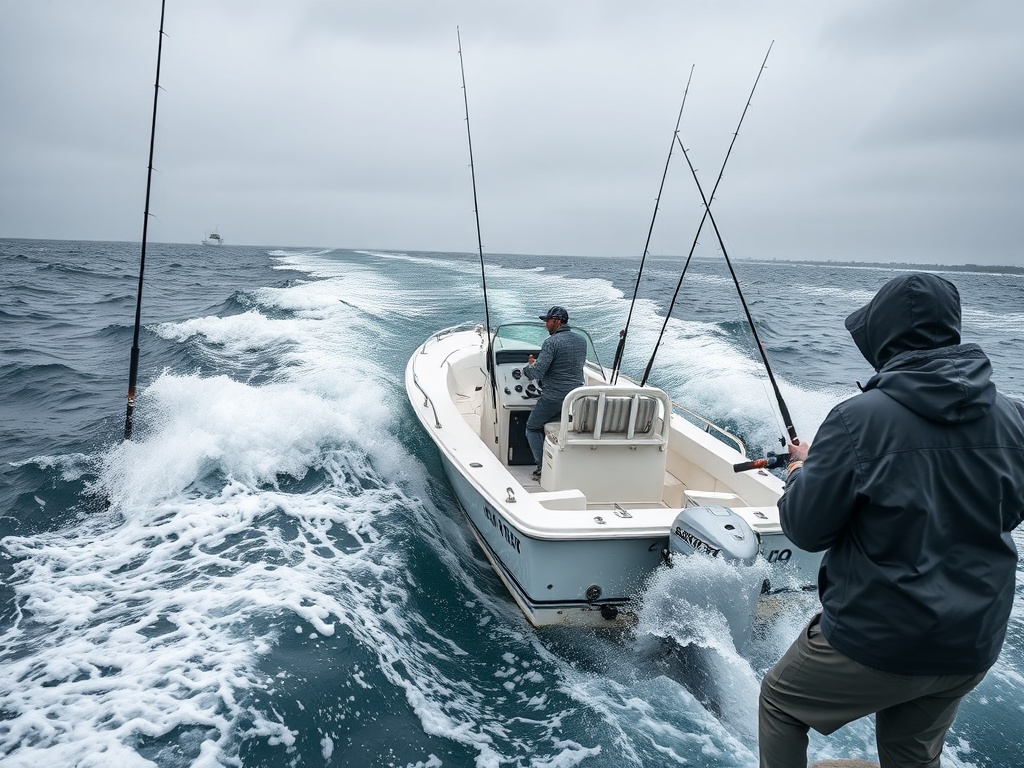
Protected bays and estuaries often have less swell than open ocean, but they are not automatically calm. A 15 mph wind can build sharp chop across a wide bay, especially when it blows against the tide or current. Inlets and exposed crossings may be rougher than the fishing grounds.
Do not judge a trip by wave height alone. Wave period is the time between crests. A forecast of 3-foot waves every 4 seconds usually means a steeper, harder ride than 3-foot waves every 10 seconds. Wind direction matters too. Offshore wind may leave the beach smooth while conditions worsen farther out, and wind against current can stack waves close together.
Ask the captain about:
- Forecast wind speed and direction
- Wave height and period
- Current or tidal conditions
- Exposed inlet crossings
- Expected ride in that specific boat
- When the final weather decision will be made
A basic phone forecast cannot account for every local shoal, inlet, headland, or current seam. The captain’s local judgment should guide the go-or-no-go decision.
Practical seasickness planning
Get a full night’s sleep, limit alcohol the evening before, and eat a light meal rather than arriving with an empty stomach. Bring water and simple snacks such as crackers, fruit, or sandwiches. Greasy food can make nausea worse.
Stay where you can see the horizon, face forward, and avoid reading or staring at your phone. Fresh air near the center or stern of the boat often feels better than a hot cabin or the bow, where motion may be sharper.
If you are considering motion-sickness medication, speak with a medical professional beforehand. Some products must be taken before departure and may cause drowsiness or interact with medications or health conditions.
Children, older anglers and limited mobility
Boat layout can matter more than trip distance. Before booking, ask about boarding steps, dock height, fixed seating, shade, restroom access, rail height, cabin space, and the physical effort required to fish.
Tell the captain about mobility limitations before paying a deposit. Ask whether guests must stand during long runs, move around coolers or tackle, or climb into the boat without a ramp. For children, confirm properly sized life jackets and a realistic trip length.
Conditions can change the suitability of any boat. Review accessibility needs, weather policies, and cancellation terms directly with the captain and crew.
Costs and Questions to Ask Before Booking a Charter
What determines inshore and offshore charter costs
Charter rates vary widely by coast, season, boat, and trip length. A private inshore half-day may commonly cost several hundred dollars, while a full-day offshore trip can run roughly $1,000-$3,000 or more. Shared trips usually lower the per-person cost, but departure schedules and fishing methods may be less flexible.
Offshore rates are often higher because larger boats burn more fuel, carry heavier tackle, and may require additional crew. Long runs, specialized bait, seasonal demand, and premium target species can also affect the price. Ask whether the advertised rate covers the entire boat or each passenger.
Confirm possible extras before paying a deposit:
- Fuel surcharge or long-run fee
- Bait and tackle charges
- Fish cleaning and packaging
- Parking or marina fees
- Food and drinks
- Crew gratuity
A customary charter gratuity is often around 15-20 percent when the crew provides good service, but practices vary by operation and region. Ask whether tips are shared among the captain and mates.
What the charter supplies and what you should bring
Many charters provide rods, reels, terminal tackle, bait, ice, required safety equipment, and basic fish storage. Some also cover fishing licenses for passengers or include fish cleaning. None of those services should be assumed. License rules vary by state, water, and charter type, so verify them with the operator and the official state wildlife agency.
Bring items that fit the forecast and boat layout:
- Nonmarking, slip-resistant shoes
- Layered clothing and a light rain jacket
- Hat, polarized sunglasses, and sunscreen
- Water, snacks, and any allowed food
- Personal medication in a waterproof bag
- Small cooler for food or cleaned fish, if permitted
Leave large hard-sided coolers and excessive gear at home unless the captain approves them. Deck space disappears quickly.
Essential questions for the captain and crew
Use this checklist before booking:
- What time do we depart and return?
- How much of the trip is likely to be travel time?
- Which species and fishing methods are expected?
- Is the trip private or shared, and what is the passenger limit?
- What tackle, bait, licenses, ice, and safety equipment are included?
- Are fuel surcharges, cleaning fees, or other charges possible?
- Is fish cleaning included, and how should guests transport the catch?
- What gratuity is customary?
- Does the boat have shade, seating, a restroom, and accessible boarding?
- Who makes the weather decision, and when?
- What happens to the deposit if weather cancels the trip?
- What does the charter cancellation policy allow for rescheduling or refunds?
Get the total expected cost and cancellation terms in writing. Also confirm current seasons, closures, bag limits, and license requirements with the operator and relevant state wildlife agency.
How to Choose and Prepare for Your Fishing Trip
Choose inshore fishing when…
Pick an inshore trip when your group has 4-6 hours, prefers a shorter boat ride, or wants to spend more time actively fishing. Protected bays, estuaries, flats, and backwaters often provide a more comfortable setting for children, older guests, first-time charter customers, and anyone concerned about seasickness.
Inshore fishing is also a strong fit if you enjoy frequent casting, working artificial lures, drifting live bait, or sight fishing in shallow water. Light tackle makes modest-size fish feel powerful, and the schedule may be easier to fit around family plans. Still, protected water can become rough in strong wind, so ask the captain about expected conditions.
Choose offshore fishing when…
Go offshore when the group can commit 6-12 hours and accepts that a meaningful part of the day may be spent traveling. These trips suit anglers interested in trolling open water, dropping baits to reefs or wrecks, jigging deep structure, and using heavier tackle.
Offshore grounds can provide opportunities for larger pelagic or reef species, but neither fish size nor catch numbers are guaranteed. Weather, migration, current, water temperature, and bait availability all matter. Confirm that every guest is comfortable with open-ocean motion, limited shade, and the physical demands of a longer trip.
Pre-trip checklist and current regulations
Complete these checks before leaving home:
- Confirm departure time, weather status, wave conditions, and the operator’s final go-or-no-go decision.
- Pack layered clothing, a rain shell, nonmarking shoes, a hat, polarized sunglasses, and sunscreen.
- Bring enough water, simple food, and approved personal items for the trip length.
- Discuss motion-sickness medication with a medical professional before the trip, including timing and possible side effects.
- Ask whether the boat provides tackle, bait, ice, drinking water, licenses, and safety equipment.
- Confirm whether coolers are permitted and how cleaned fish should be stored and transported.
- Arrange fish cleaning in advance instead of assuming it is included.
- For shore, pier, kayak, or private-boat fishing, verify parking, launch hours, access restrictions, and required safety gear.
Fishing licenses, seasons, closures, bag limits, and access rules vary by state and water. Check current details with the relevant official state wildlife agency and confirm charter-specific requirements directly with the operator.
Frequently Asked Questions About Inshore and Offshore Fishing
How far offshore is offshore fishing?
There is no universal mileage cutoff. One operator may call a trip offshore at 10 miles, while another reserves that label for runs of 30 miles or more. Local water depth, exposure, currents, and the location of reefs, wrecks, or pelagic fishing grounds all affect the description.
Ask for the expected run distance, travel time, fishing depth, and typical sea exposure. Those details are more useful than the trip name.
Is inshore or offshore fishing better?
Neither is automatically better. Match the trip to your priorities:
- Choose inshore for a shorter run, a 4-6 hour schedule, frequent casting, light tackle, and generally more protected water.
- Choose offshore for trolling, deep bottom fishing, heavier tackle, specific open-water species, and a 6-12 hour commitment.
- Consider the total price, including fuel fees, parking, fish cleaning, and a possible 15-20 percent crew gratuity.
- Check each guest’s tolerance for boat motion, sun exposure, limited seating, and long travel periods.
Offshore fishing can provide access to larger species, but it does not guarantee larger fish or a better catch.
Is nearshore fishing different, and which trip is best for a first charter?
Nearshore fishing usually falls between protected inshore water and longer offshore runs. Trips may visit beaches, coastal reefs, wrecks, or structure within sight of land, although regional definitions vary.
A 4-6 hour inshore or nearshore charter is often practical for a first trip. It limits fatigue, provides more schedule flexibility, and lets guests learn how they handle boat motion. Offshore may still be the right first choice if the target species requires it and everyone accepts the longer run.
Before booking, confirm current weather policies, licenses, seasons, closures, and bag limits with the operator and the relevant official state wildlife agency.
Boating safety: Follow all instructions from the captain and crew, remain in designated passenger areas, and wear an approved, properly fitted life jacket whenever required or advised. Do not move toward the bow, stern, or working deck without crew permission.
Small-craft safety: Kayak and private-boat anglers should carry all legally required safety and communication equipment, wear a properly fitted personal flotation device, check marine conditions, file a float plan, and avoid waters beyond their vessel, experience, or physical ability.
Sun and heat safety: Bring adequate drinking water, use broad-spectrum sunscreen as directed, wear sun-protective clothing, and tell the crew immediately if you experience dizziness, confusion, weakness, severe headache, vomiting, or other signs of heat illness.
Fishing hazards: Hooks, knives, heavy tackle, fish teeth, spines, and moving equipment can cause serious injury. Follow crew instructions and allow experienced crew members to handle unfamiliar, large, or potentially dangerous fish.
Regulations: Fishing, boating, protected-species handling, catch possession, and transport rules vary by location and can change. Verify current requirements with the appropriate wildlife and boating authorities before departure.