Private vs Shared Fishing Charter: The Quick Difference
A private fishing charter reserves the entire boat for your group. A shared fishing charter, often called a split charter, sells individual seats to unrelated anglers. Party boats and head boats also sell per-person tickets, but they typically carry more passengers and follow a fixed schedule.
| Factor | Private charter | Shared or split charter | Party or head boat |
|---|---|---|---|
| Price | One private boat rate | Per-person ticket | Per-person ticket |
| Privacy | Exclusive to your group | Shared with a few anglers | Shared with a larger crowd |
| Itinerary control | Usually the most input | Limited | Minimal |
| Crowding | Based on your group size | Moderate | Highest |
| Instruction | More personal crew attention | Shared attention | Limited one-on-one time |
| Best fit | Families, groups, custom trips | Solo anglers and couples | Budget-focused anglers |
Private Charter, Split Charter and Head Boat Defined
On a private charter, your group shares the available rail space, rods and crew help without outside passengers. Capacity still matters - six guests on a small boat can feel very different from four.
A split charter places several separately booked anglers on one charter boat. It may carry only four to six passengers, so it should not be confused with a high-capacity head boat. Always ask the operator for the licensed capacity and expected passenger count before booking.
How Private and Shared Charter Costs Compare
Use a Break-Even Calculation for Your Group
Compare the total trip cost, not just the advertised rates. Start with current written quotes from the operators, then use this formula:
Private boat rate ÷ number of anglers = private cost per person
Next, compare that figure with the shared charter’s per-person ticket. For example, if your group grows from two anglers to six, the private cost per person drops because the boat rate is divided among more people. The shared cost usually rises with every added ticket.
Check the private boat’s maximum passenger capacity before calculating. For a shared trip, ask whether there is a minimum number of passengers required to depart and what happens if too few seats sell. The operator may reschedule, refund, or cancel according to its booking policy.
What Does the Quoted Charter Rate Include?
Ask for an itemized quote covering:
- Rods and reels
- Bait and tackle
- Lost or damaged tackle charges
- Fishing license coverage
- Fish cleaning and bagging
- Ice and drinking water
- Parking or marina fees
- Food and beverages
- Taxes and booking fees
License coverage varies by location and trip type. Confirm it with the operator, then verify current requirements through the relevant official state wildlife agency. The same applies to fishing seasons, size restrictions, and bag limits.
Fuel Surcharges and Crew Gratuity
A fuel surcharge can make a lower advertised rate more expensive at checkout. Ask whether fuel is included, charged as a flat fee, or adjusted for offshore distance. Get the final amount in writing before paying a deposit.
Crew gratuity may also be separate. Tips are customary on many US charters, often discussed as a percentage of the trip price, but practices vary by port, boat, and operator. Ask whether gratuity is included and what range is customary for that crew. Treat it as part of your planning total, not as a surprise after docking.
Privacy, Flexibility and Control of the Fishing Itinerary
Private charters usually offer more control over departure time, fishing grounds, pace, and techniques. That flexibility helps families who may need a shorter day, experienced anglers pursuing a specific bite, and groups balancing serious fishing with sightseeing or swimming breaks.
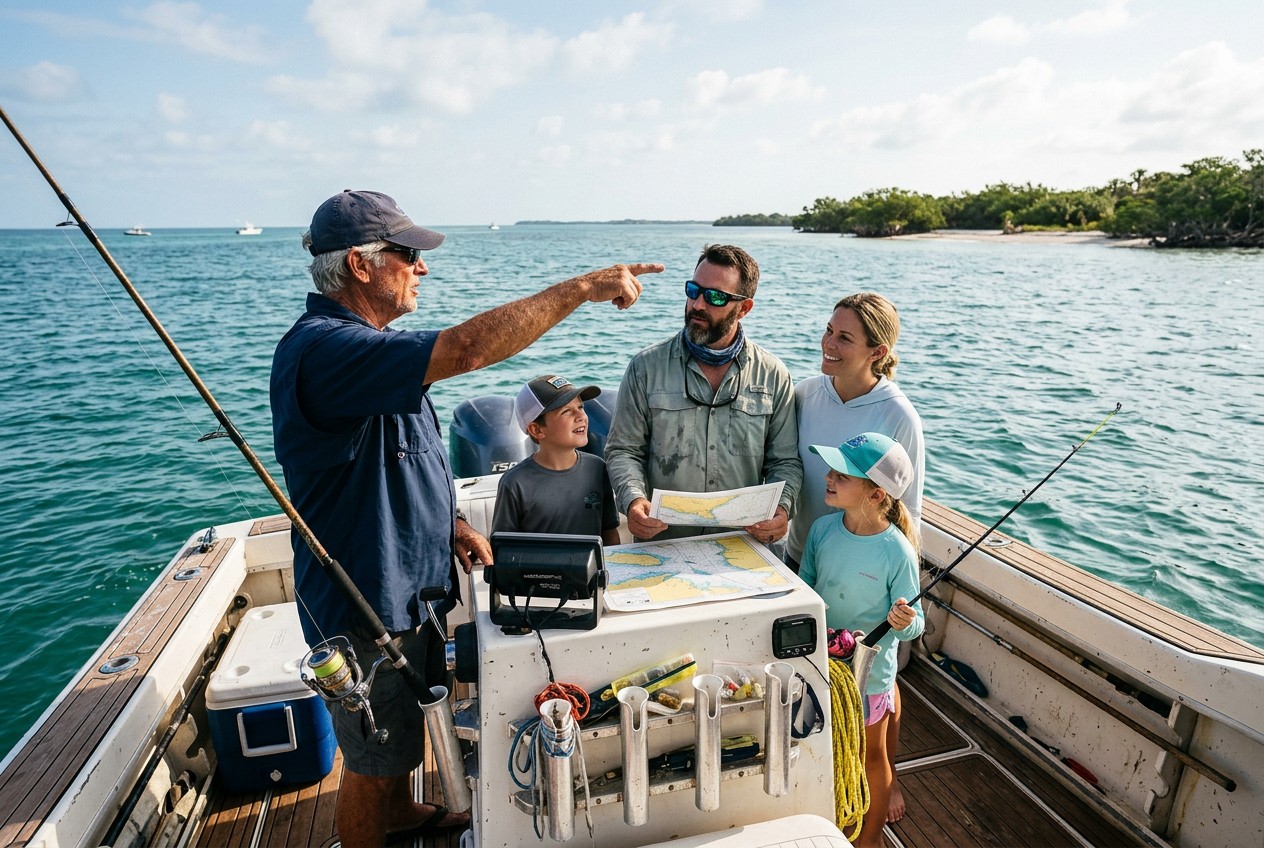
Shared trips generally run on a fixed schedule and established itinerary. The captain must choose a plan that works for the whole boat, not one passenger. Weather, sea conditions, regulations, and recent fish activity still determine what is practical on either format.
Choosing Target Species and Fishing Style
A private group can often request a target species or preferred method, such as trolling, bottom fishing, casting artificial lures, or catch-and-release fishing. Discuss those goals before booking. The operator can explain whether the boat, tackle, trip length, and local conditions fit the plan.
On a shared charter, expect the captain and crew to select the fishing grounds and technique. Switching from reef fishing to offshore trolling because one passenger asks may not be realistic. Ask whether rods are assigned, shared, or rotated when trolling.
Fishing seasons, legal sizes, and bag limits vary by state and water. Confirm the current rules with the operator and the relevant official state wildlife agency.
Half-Day vs Full-Day Fishing Trips
A half-day fishing trip typically favors nearby bays, reefs, or nearshore fishing grounds because travel time reduces time with lines in the water. It can suit children, first-time anglers, and anyone concerned about motion sickness.
A full-day trip provides more time to reach offshore or deep-sea fishing areas, change locations, or try multiple methods. It also means more exposure to sun, waves, and fatigue.
Before choosing, ask how many miles the boat typically travels, how long the run takes, and whether the advertised duration includes boarding and the safety briefing. A longer booking does not automatically guarantee more fishing or a particular species.
Crowding, Crew Attention and Actual Fishing Time
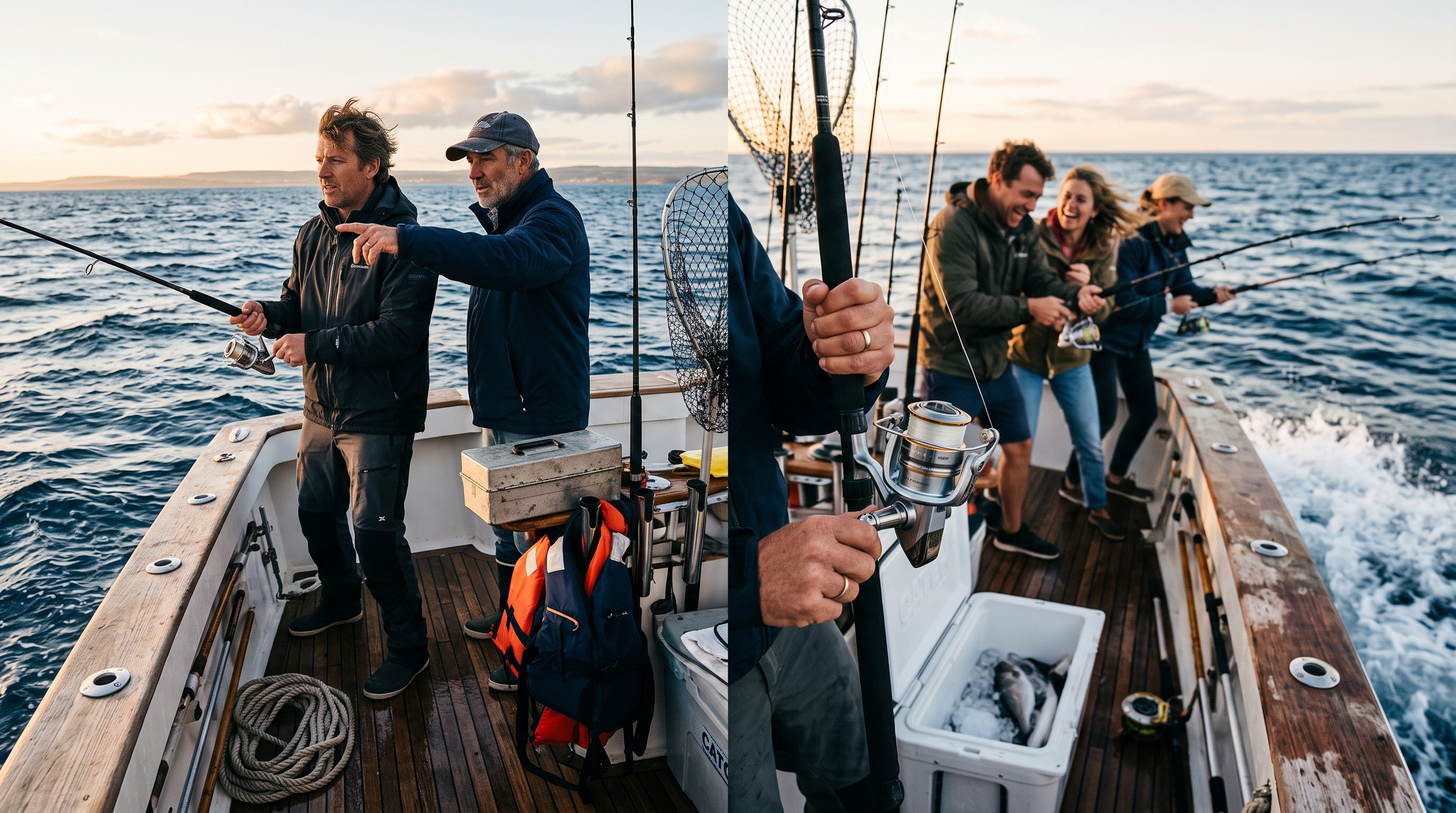
Passenger count affects more than elbow room. It determines how quickly the crew can bait hooks, clear tangles, net fish, and provide personal instruction. A six-passenger split charter may feel comfortable, while a high-capacity head boat requires more patience and cooperation at the rail.
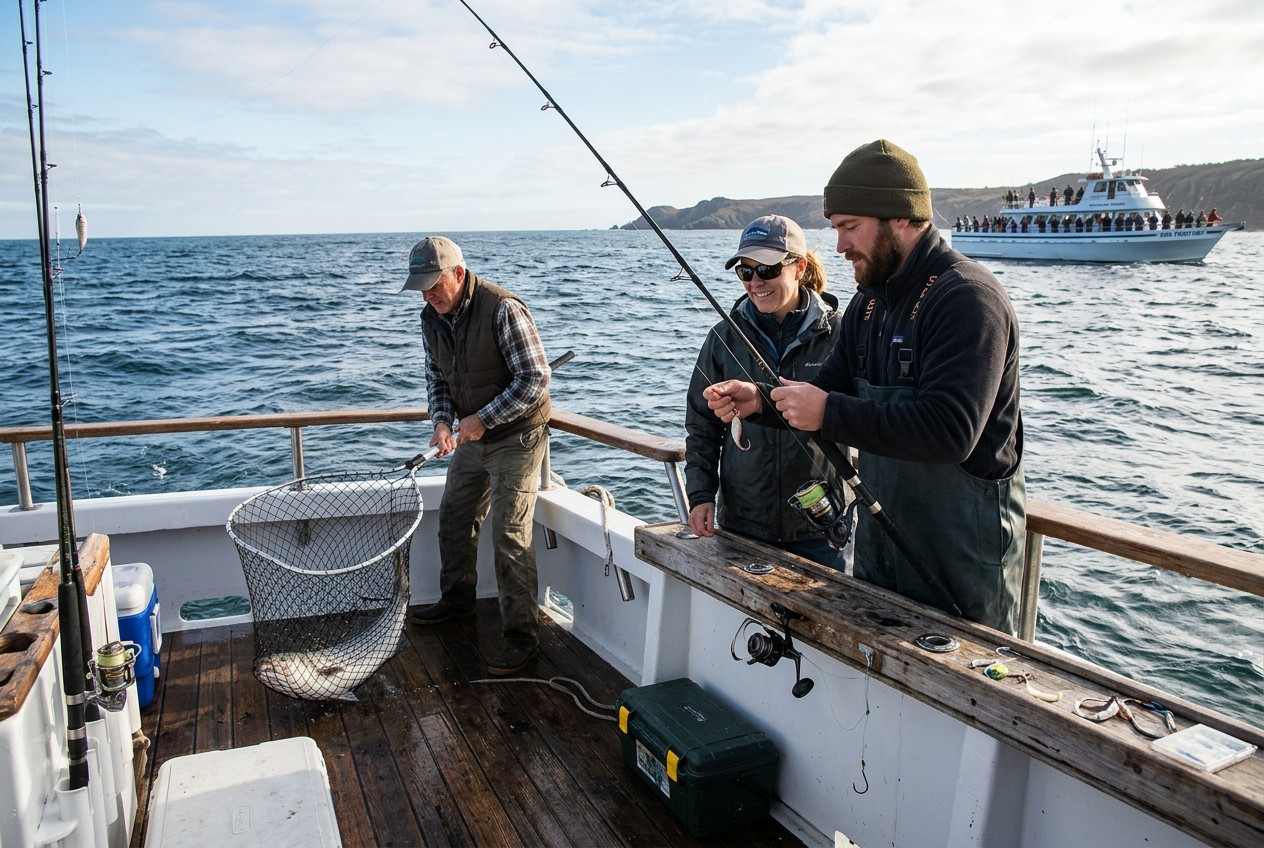
Rail Space, Rod Rotation and Crew Help
Ask how fishing positions are managed before booking. Some shared boats assign rail spots. Others rotate anglers so everyone gets time at productive positions, especially when trolling with a limited number of rods.
Crowded rails can create crossed lines when currents, wind, or hooked fish move across the boat. Experienced crews manage this well, but landing a fish may require nearby anglers to reel in or move. Crew attention is also divided among passengers, so help with knots, baiting, technique, and fish handling may not be immediate.
On a private charter, the same crew serves only your group. This usually allows more coaching and faster assistance, although actual service still depends on group size and crew count.
How Much of the Trip Is Spent Fishing?
A listed six-hour trip rarely means six hours with lines in the water. The clock may include boarding, a safety briefing, leaving the marina, and travel time to fishing grounds.
Before comparing trips, ask:
- When does the advertised trip time officially begin?
- How early is check-in?
- How long do boarding and safety instructions usually take?
- What is the boat’s cruising speed?
- How far are the typical fishing grounds?
- How much fishing time is common under normal conditions?
- Can weather or sea conditions require slower travel?
A faster boat may provide more fishing time than a slower boat on an identical six-hour itinerary. Distance matters too. A 20-mile offshore run can consume a substantial part of the day, while nearby reef or bay fishing may put lines in the water sooner.
Which Charter Format Fits Your Group?
When a Shared Fishing Charter Is the Better Choice
Shared charters usually make the most sense for solo anglers and couples who would otherwise pay an entire private boat rate. You buy only the seats you need, making the format easier on a limited trip budget.
It is also a practical choice when you are comfortable with:
- A fixed departure time and return time
- A captain-selected fishing itinerary
- Shared rail space and crew attention
- Fishing alongside people with different skill levels
- Limited control over target species and techniques
Ask how many passengers are expected. A six-person split charter offers a different experience from a high-capacity head boat, even though both charge per-person tickets.
When a Private Fishing Charter Is Worth It
A private charter becomes more attractive as your group approaches the boat’s capacity. Divide the complete private rate by the number of guests, including fuel charges, fees, and expected gratuity, before comparing it with shared tickets.
Families with children and first-time anglers often benefit from extra instruction, fewer crossed lines, and more control over breaks. Privacy also matters for birthdays, reunions, and groups that want to talk, take photos, or fish at their own pace.
Discuss your priorities with the captain before paying. Private service may allow more flexibility, but weather, fishing regulations, and safe operating limits still control the day.
Accessibility, Comfort and Seasickness
Boat size alone does not tell you how comfortable the trip will be. Ask the operator about:
- An enclosed or portable restroom
- Shade and protected seating
- Boarding steps and dock height
- Handrails and deck obstacles
- Space for mobility equipment
- Seating available while underway
- Rules for coolers, food, and alcohol
Request specific details for children, older guests, or anglers with disabilities. Do not assume a boat can accommodate a wheelchair or walker safely.
Anyone prone to motion sickness should discuss medication with a healthcare professional before departure and follow the operator’s food and hydration guidance. On a private trip, the captain may be able to shorten the outing if someone becomes ill, subject to policy and conditions. A shared boat generally follows its scheduled itinerary because other passengers paid for the full trip.
Questions to Ask Before Booking a Fishing Charter
Get the trip details in writing before paying a deposit. Tell the operator your group size, experience levels, target species, preferred techniques, and any need for extra instruction. Also confirm what personal gear to bring, plus rules for coolers, food, glass containers, and alcohol.
Capacity and Minimum Passenger Questions
Ask these questions before reserving seats:
- What is the boat’s licensed passenger capacity?
- How many passengers are expected on this trip?
- How many crew members will be aboard?
- Is there a minimum number of ticketed passengers required to depart?
- What happens if a shared charter does not fill?
- Can the operator move your booking to another boat or departure time?
- Are rods assigned, shared, or rotated?
For a private charter, confirm that the quoted rate covers your entire group and that adding another guest will not trigger a higher rate or capacity issue.
Weather, Cancellation and Refund Policies
Read the cancellation policy before entering payment information. Ask what happens if the captain cancels for unsafe weather, mechanical trouble, or another operational issue. The options may include a refund, credit, or rescheduled trip.
Also ask how customer cancellations are handled, including deadlines, deposit forfeiture, and name changes. Find out whether rain alone qualifies for cancellation and who makes the final weather decision. Offshore conditions can be unsafe even when the marina looks calm.
Licenses, Seasons and Catch Rules
Confirm whether the charter provides fishing license coverage for every passenger or whether individual licenses are required. Ask which target species are currently legal to retain and whether the trip may switch to catch-and-release fishing if regulations or conditions change.
Requirements vary by state, water, species, and trip type. Confirm the same details with the operator shortly before departure because rules and emergency closures can change.
Private vs Shared Fishing Charter FAQ
What Is a Shared Fishing Charter?
A shared fishing charter sells individual seats to anglers who may not know one another. A small split charter often carries four to six passengers and provides a more personal experience.
A party boat or head boat also sells per-person tickets but may carry many more anglers. Expect a fixed departure time, preset itinerary, shared rail space, and less one-on-one instruction. Ask for the expected passenger count, not just the boat’s maximum capacity.
How Much Should You Tip on a Fishing Charter?
Tipping customs vary by port and operator. Before departure, ask whether crew gratuity is included in the quoted price and what range is customary for that boat.
Some operators suggest a percentage of the trip rate, while others handle tips differently between the captain and crew. Base your decision on local practice and service rather than assuming one mandatory amount. Remember to include gratuity, fuel surcharges, parking, and fish-cleaning fees when comparing total costs.
Is a Private or Shared Charter the Better Value?
Shared per-person pricing usually offers better value for solo travelers and couples who accept a fixed schedule and shared crew attention. Private charters can become competitive when several anglers divide the complete boat rate.
Calculate:
Total private rate ÷ number of guests = private cost per person
Compare that result with the shared ticket, including every required fee. Then look beyond price. Choose shared if budget matters most and you are comfortable sharing space. Choose private if your group values privacy, easier instruction, comfort, itinerary input, or flexibility for children and guests prone to motion sickness.
Safety: Always follow the captain and crew’s instructions. Fishing vessels may have sharp hooks, knives, moving equipment, slippery decks, sudden vessel movement, and fish with sharp teeth or spines. Wear secure non-slip footwear and ask the crew to handle unfamiliar or hazardous fish.
Swimming: Enter the water only with the captain’s explicit permission and only when conditions and vessel procedures allow it. Fishing gear must be secured, and passengers must follow all instructions concerning engines, flotation devices, currents, reboarding, and designated swimming areas.
Medication and alcohol: Consult a healthcare professional before using motion-sickness medication, follow the label, and check for drowsiness or interactions with alcohol and other medicines. Do not drink alcohol or operate equipment if your judgment, balance, or coordination may be impaired.
Children and flotation devices: Confirm current local life-jacket requirements before departure and verify that the vessel provides an approved, properly fitted flotation device for every child and adult who needs one.
Sun and heat: Bring sufficient water, sun-protective clothing, sunscreen, and weather-appropriate gear. Tell the crew promptly if anyone develops dizziness, confusion, weakness, severe nausea, or other signs of heat illness.
Sources and verification
- USCG National Maritime Center provides official merchant-mariner credential information.
- National Weather Service marine forecasts provides official coastal and offshore forecast links.
- NOAA Fisheries fishing resources routes readers to current federal and state fishing-rule sources.
These sources support the credential, weather and regulation-verification context above. They do not validate a private or shared trip’s price, passenger limit, operator, vessel, availability or outcome. Any dollar examples are editorial arithmetic rather than official or measured market data.