Do You Need a Fishing License on a Charter?
A fishing charter often covers paying passengers through a blanket fishing license or for-hire vessel license. That coverage is not automatic nationwide. Requirements depend on the state, saltwater or freshwater location, vessel license, trip route, and target species.
A licensed charter captain may hold a U.S. Coast Guard credential, but that credential does not provide fishing privileges for passengers. Some states require each angler to carry an individual fishing license or charter passenger license.
The Short Answer for Charter Passengers
A fishing license is legal authorization to fish in a particular jurisdiction and type of water. A license exemption means current rules allow a qualifying person to fish without buying an individual license, often because a charter vessel covers passengers or an age-based exemption applies.
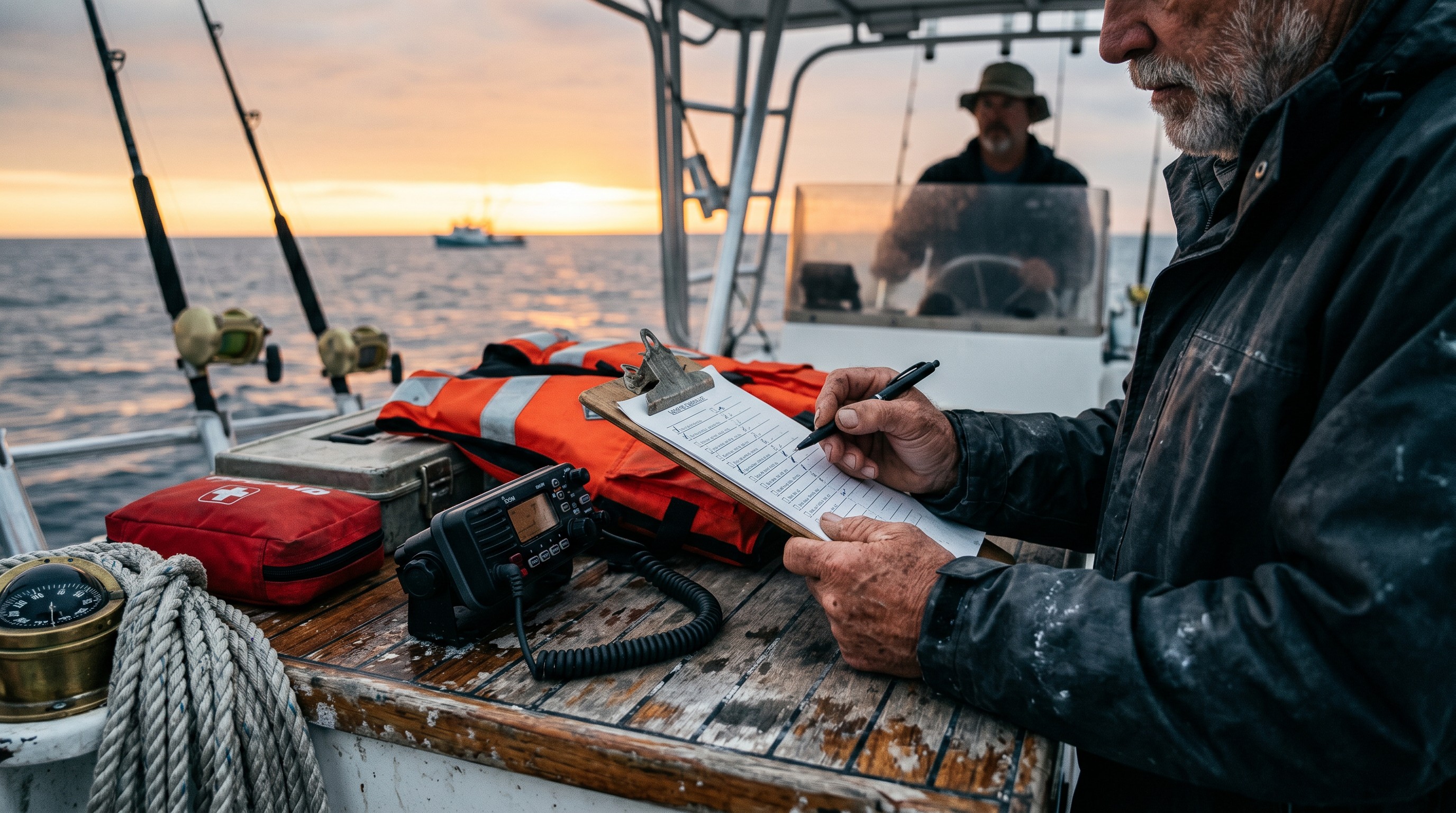
Before boarding, confirm:
- Whether the boat’s license covers every paying passenger
- Whether coverage applies in the waters you will fish
- Whether nonresidents, minors, seniors, or observers need separate documentation
- Whether the target species requires a harvest permit, registration, stamp, or endorsement
Ask the operator for a clear answer, then verify it through the relevant official state wildlife agency. Carry identification and any required digital or printed license proof.
How Charter Fishing License Coverage Works
Blanket and For-Hire Vessel Licenses
A blanket fishing license or for-hire vessel license may cover paying passengers while they fish from the named charter boat. In that arrangement, anglers usually do not purchase separate basic licenses for the covered trip.
Coverage is tied to specific conditions. It may apply only to the licensed vessel, certain waters, or a particular trip type. It might not follow you onto a beach, dock, kayak, or another boat. If the captain drops passengers ashore to cast for an hour, individual licenses may be required.
| Licensing arrangement | Typical passenger requirement |
|---|---|
| Blanket vessel coverage | Passenger fishes under the boat’s license |
| Non-blanket vessel license | Vessel is authorized, but anglers may need separate licenses |
| Individual licensing | Each angler obtains the required state or charter passenger license |
These are common arrangements, not nationwide rules. Confirm the boat’s exact coverage with the operator and the official state wildlife agency.
When Passengers Need Individual Licenses
You may need an individual fishing license when the charter does not carry blanket coverage, the trip enters waters outside that coverage, or the fishing takes place from shore, a kayak, or an unlicensed vessel.
Your options may include:
- A resident fishing license
- A nonresident fishing license
- A short-term fishing license for one or several days
- A charter passenger license issued for for-hire trips
Residency definitions and license durations vary. Do not choose solely by price or trip length. Check the planned water, target species, and departure date against current state requirements.
A Captain’s License Is Not a Passenger Fishing License
A U.S. Coast Guard captain’s license shows that the captain holds the credential required to operate a passenger vessel in applicable waters. It does not automatically authorize passengers to fish.
A state fishing guide license regulates guiding services. A vessel license applies to the boat. A passenger fishing license grants fishing privileges to an individual. One captain may need several credentials, plus federal permits for certain offshore fisheries.
Before paying a deposit, ask which credential covers you by name or passenger status. Request written confirmation when practical, then verify current requirements with the relevant state wildlife agency.
Saltwater, Freshwater, State and Federal Water Rules
Saltwater vs. Freshwater Charter Requirements
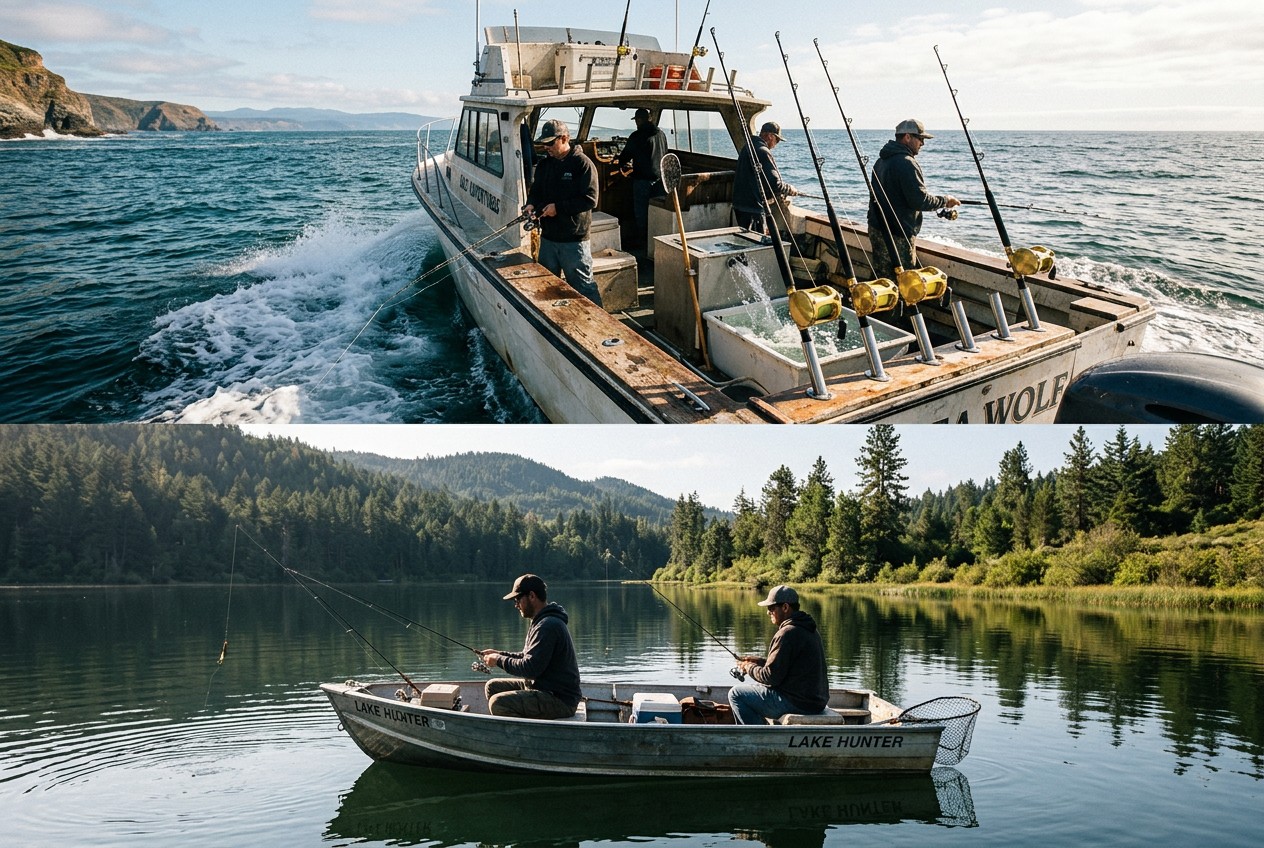
Saltwater and freshwater licenses are usually separate privileges. A vessel license that covers passengers on an offshore charter may provide no coverage on an inland lake, reservoir, or river. The reverse can also be true.
Mixed-water trips require extra attention. A boat might leave a coastal marina, travel through tidal water, and fish farther inland. Ask the operator where fishing will actually occur, not just where the boat launches.
Confirm these details before booking:
- Saltwater, freshwater, or both
- The state or states where lines will be in the water
- Whether the boat’s coverage applies throughout the route
- Any separate registration, harvest permit, or species endorsement
Trips That Cross State Boundaries
Launching in one state does not necessarily authorize fishing in another. Passenger license requirements may change when the boat crosses a state line, enters a shared river or bay, or lands fish at a port outside the departure state.
Reciprocal agreements sometimes recognize certain licenses across boundaries, but coverage can depend on the water, license type, residency, and current agreement. Do not assume reciprocity applies to a charter passenger or for-hire vessel license.
Ask the captain which jurisdictions the trip may enter and where the catch will be landed. Then check each relevant official state wildlife agency for current licensing, reporting, season, size limit, and bag limit rules.
What Changes in Federal Waters
State waters lie close to shore, while federal waters generally begin farther offshore. The exact boundary varies by location and fishery, so confirm the planned route with the operator.
A charter operating in federal waters may need a federal fishing permit for certain species or fisheries. That permit applies to the vessel’s legal operation. It does not automatically replace every state passenger license, state registration, or species-specific requirement.
Three rule sets may overlap on one trip:
| Requirement | What it controls |
|---|---|
| State fishing license | Passenger fishing privileges |
| Federal vessel permit | Charter access to a federal fishery |
| Species regulations | When, where, and how fish may be caught or kept |
Verify all three separately. The charter operator should confirm vessel permits, while passengers should confirm personal requirements with the relevant state wildlife agency.
Rules for Different Passengers and Guided Trip Types
Nonresidents, Minors, Seniors and Other Exemptions
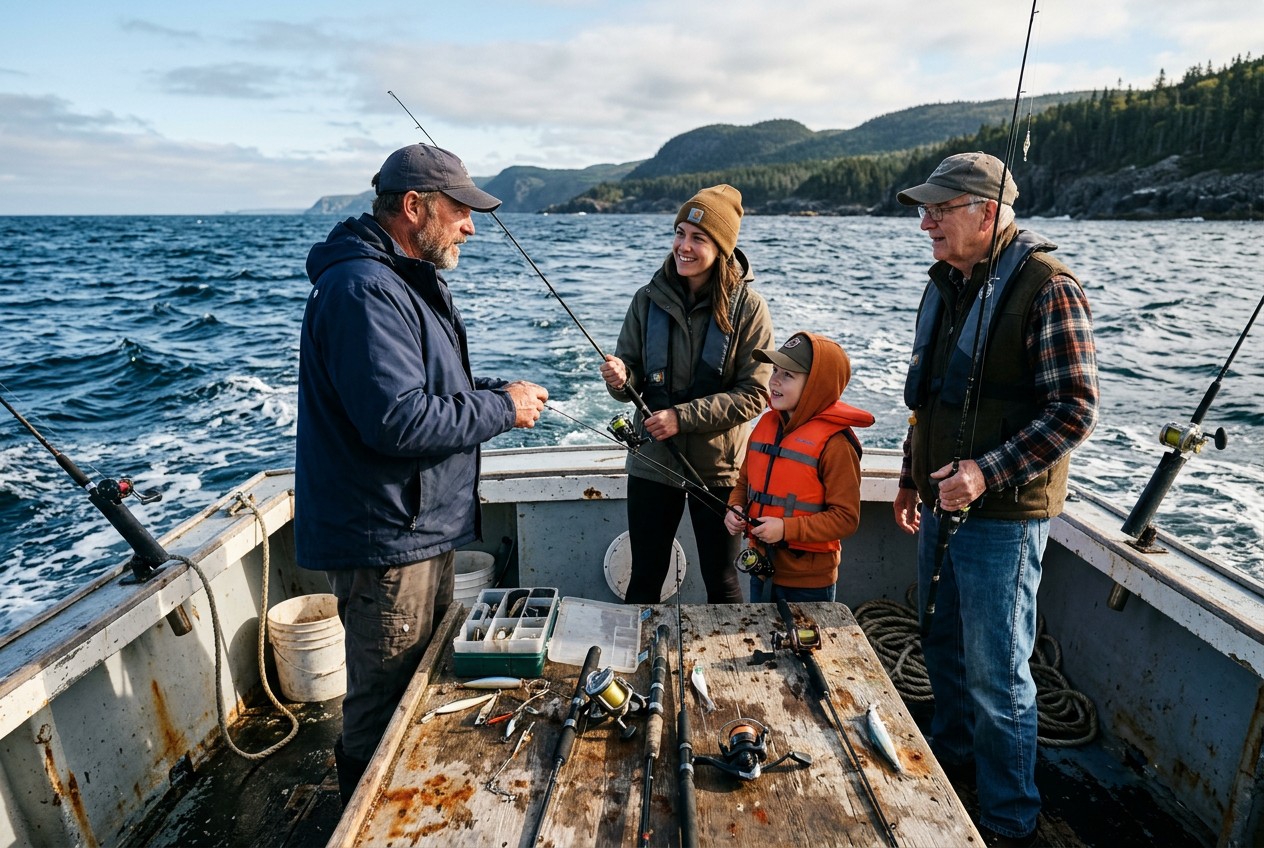
Nonresidents may need a nonresident fishing license even when local residents qualify for an exemption or lower-cost option. Short-term licenses are often practical for visitors, but the correct license depends on the water, trip date, and charter’s coverage.
Minors, seniors, active-duty military members, veterans, and anglers with certain disabilities may qualify for an age exemption or another license exemption. Eligibility, residency definitions, and required documents vary by state.
Non-Fishing Guests, Observers and Parents
An observer who only rides along may not need a fishing license, but participation can change that status. These actions may legally count as fishing:
- Baiting hooks
- Setting or retrieving lines
- Holding a rod while a line is fishing
- Reeling in a hooked fish
- Helping a child operate fishing gear
Parents should confirm how the state treats adults assisting minors. If you might take a turn on a rod, tell the operator before departure and obtain any required license.
Headboats, Party Boats, Kayaks and Shore-Based Guides
License coverage often follows the vessel, not the guide. That distinction matters when comparing trip types before you book.
| Guided trip | Key licensing question |
|---|---|
| Private charter | Does the named boat cover all paying passengers? |
| Headboat or party boat | Does its for-hire license cover each ticketed angler? |
| Guided kayak trip | Must each paddler hold an individual license? |
| Shore-based guide | Does every angler need a license for the beach, bank, or pier? |
A blanket license on a charter boat may end when you step onto a kayak, sandbar, dock, or shoreline. Public pier exemptions, where available, may also be limited to specific structures and conditions.
Ask the operator exactly where you will cast and whether the trip changes platforms. Then verify current passenger, access, and identification rules with the relevant official state wildlife agency.
Extra Permits and Fishing Rules the Charter License May Not Cover
Harvest Permits, Stamps and Species Endorsements
A charter boat’s blanket or for-hire license may cover basic fishing privileges without covering every species-specific requirement. Depending on the state, water, and target fish, passengers may also need:
- A harvest permit for keeping a regulated species
- A state fishing or saltwater registration
- A stamp attached to an individual license
- A species endorsement for targeting or retaining certain fish
- A catch card or electronic harvest report
Ask whether each requirement applies to the vessel, the captain, or every angler.
Licensing vs. Seasons, Bag Limits and Size Limits
A fishing license gives you legal authorization to fish. It does not guarantee that a particular species is open for harvest.
| Rule | What it controls |
|---|---|
| Fishing season | When a species may be targeted or kept |
| Bag limit | How many fish an angler or vessel may retain |
| Size limit | Which fish are legal to keep |
| Gear rule | Which hooks, baits, or equipment may be used |
Passengers remain subject to current conservation rules even when fishing under the boat’s license. Limits may apply per person, per vessel, or across multiple days. Regulations can also change during the year, so confirm them with the operator and official agency close to the trip date.
Does Catch-and-Release Change the Requirement?
Catch-and-release fishing can still count as fishing because you are actively attempting to hook a fish. Releasing every catch does not automatically create a license exemption or remove registration, gear, season, or species restrictions.
If the charter plans to target a closed or specially managed species for release, ask the operator whether that activity is legal and whether extra permits apply. Do not rely on the fact that no fish will enter the cooler.
Pre-Booking Fishing License Checklist
Questions to Ask the Charter Operator
Before paying a deposit, ask the operator:
- Does the boat’s license cover every paying passenger?
- Which state, freshwater, saltwater, or federal waters will we fish?
- Do nonresidents, minors, seniors, or observers need separate licenses?
- Are federal vessel permits required for the target species?
- Does each angler need a harvest permit, registration, stamp, or species endorsement?
- Will we fish from shore, a pier, or a kayak at any point?
Get the answers by email or text when practical. Written confirmation helps prevent confusion if the itinerary or target species changes.
Verify the Rules With the State Wildlife Agency
Visit the official state wildlife agency website and search its current fishing license and for-hire charter pages. Match the rules to the trip date, fishing location, water type, residency, age, and target species.
If the website is unclear, call the agency’s licensing office. Explain that you will be a passenger on a charter and provide the departure port, intended waters, and vessel license arrangement.
When an individual license is required, purchase the correct resident, nonresident, or short-term option before boarding. Check its effective date and activation time rather than assuming an online purchase becomes valid immediately.
Carry Proof and Understand Responsibility
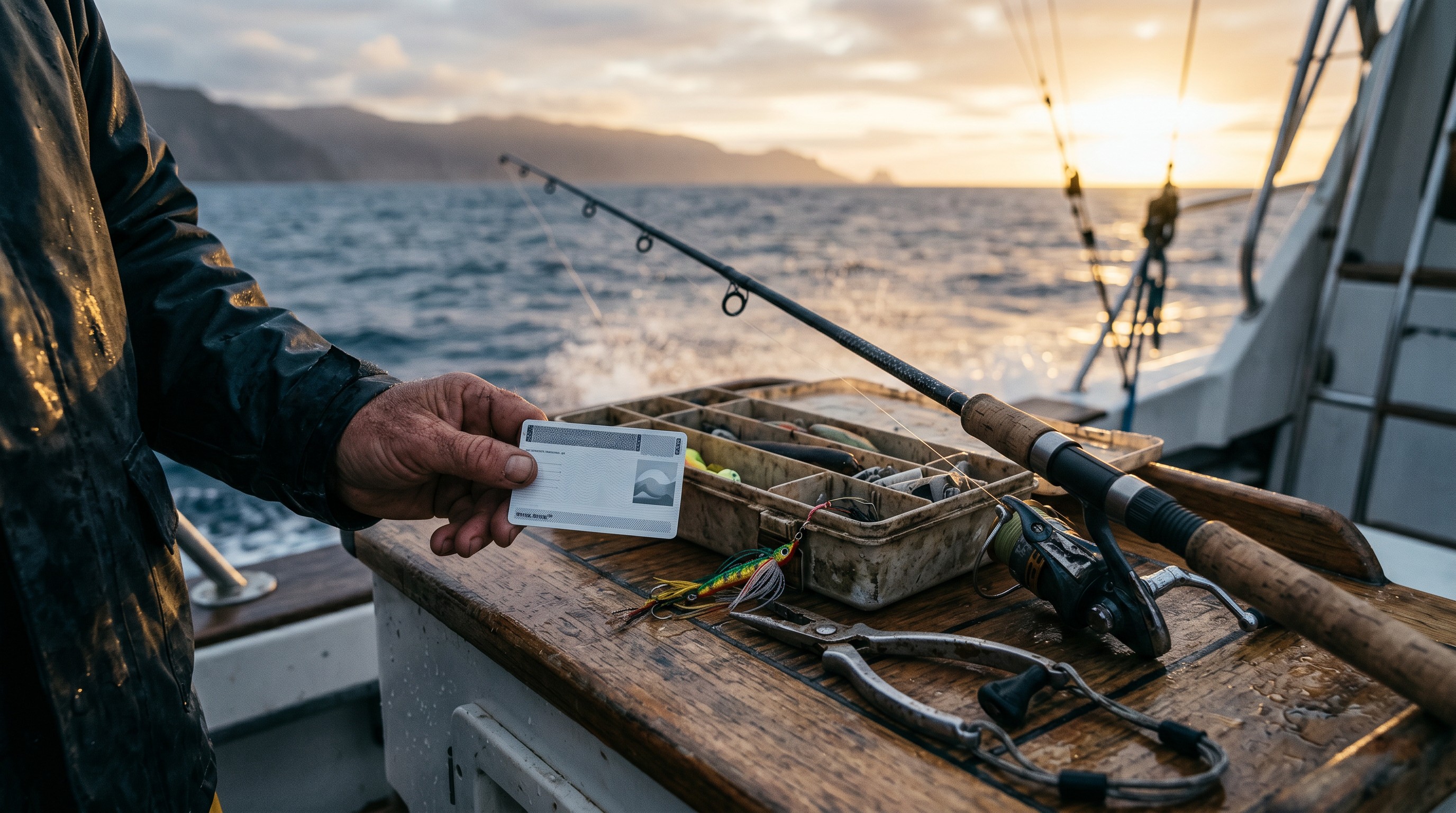
Bring a government-issued photo ID plus any required digital or printed license, registration, endorsement, or exemption document. Include these documents on your fishing charter packing checklist. Save electronic proof offline because cell service can disappear several miles from shore.
Do not assume the captain is solely responsible if you fish without required passenger coverage. Anglers may face individual consequences under state rules, even when a booking description was unclear. If this is your first time on a charter, take extra care to confirm the paperwork rather than assuming the crew handles everything.
Finally, charter coverage usually applies only during the covered trip. If you plan to cast from a beach, public pier, kayak, rental boat, or private boat before or afterward, check whether you need a separate license. Pier exemptions and shoreline access rules can be location-specific, so verify them with the relevant official state wildlife agency.
Fishing License on a Charter FAQ
Do I Need a License If I Do Not Catch or Keep Fish?
Possibly. Licensing generally applies to the act of fishing, not your results. A trip with zero bites can still require a fishing license, charter passenger license, or vessel-based coverage.
Catch-and-release usually counts as fishing too. Releasing every fish does not automatically remove license, registration, season, gear, or species permit requirements.
Can I Ride Along Without a Fishing License?
A true observer may be allowed to ride without an individual license, depending on state rules and the charter’s vessel license. Stay clear about what “observer” means.
Handling a rod, setting a line, baiting a hook, reeling in a fish, or helping land the catch may count as fishing. Parents assisting children should ask specifically how the state treats that activity. If there is any chance you will fish, arrange the proper coverage before boarding.
Can I Buy a Fishing License at the Last Minute?
Many states sell licenses online and through authorized retailers, but do not wait until the boat leaves the dock. The needed license type may depend on residency, water type, trip length, and target species.
Check the effective date, activation time, identification requirements, and accepted proof. Save a digital copy offline or carry a printed version. The charter operator and official state wildlife agency should confirm the current requirements for your exact trip.
This article provides general information and is not legal advice. Fishing regulations, license exemptions, jurisdictional boundaries, seasons, and permit requirements can change; verify the rules for your trip date, location, vessel, and target species with the relevant state and federal agencies before fishing.
A charter operator’s statement or booking confirmation does not override applicable law. Passengers remain responsible for obtaining any required licenses, registrations, permits, endorsements, and proof of exemption.
Sources and verification
- NOAA Fisheries fishing resources links to federal permit information and official state fishing agencies for current license and regulation checks.
- USCG National Maritime Center provides official merchant-mariner credential information.
- USCG federal recreational boating regulations provides federal boating-rule resources.
These sources support the agency-routing, credential and boating-rule context above. They do not determine license coverage or an exemption for a specific passenger, vessel, water or date and do not validate an operator; verify the exact trip with the responsible agencies.