What Is a Fishing Charter for Beginners?
A fishing charter for beginners is a guided trip on a charter boat with a licensed captain or fishing guide who knows the local water, target species and productive techniques. Instead of buying tackle or figuring out where to fish, you receive equipment, boat access and hands-on coaching. Exact services vary, so confirm every inclusion directly with the operator.
What the Captain and Crew Usually Provide
Most charters supply:
- A properly equipped boat and required safety equipment
- A personal flotation device for each passenger
- A rod and reel matched to the fishing method
- Light tackle, rigs, hooks and bait
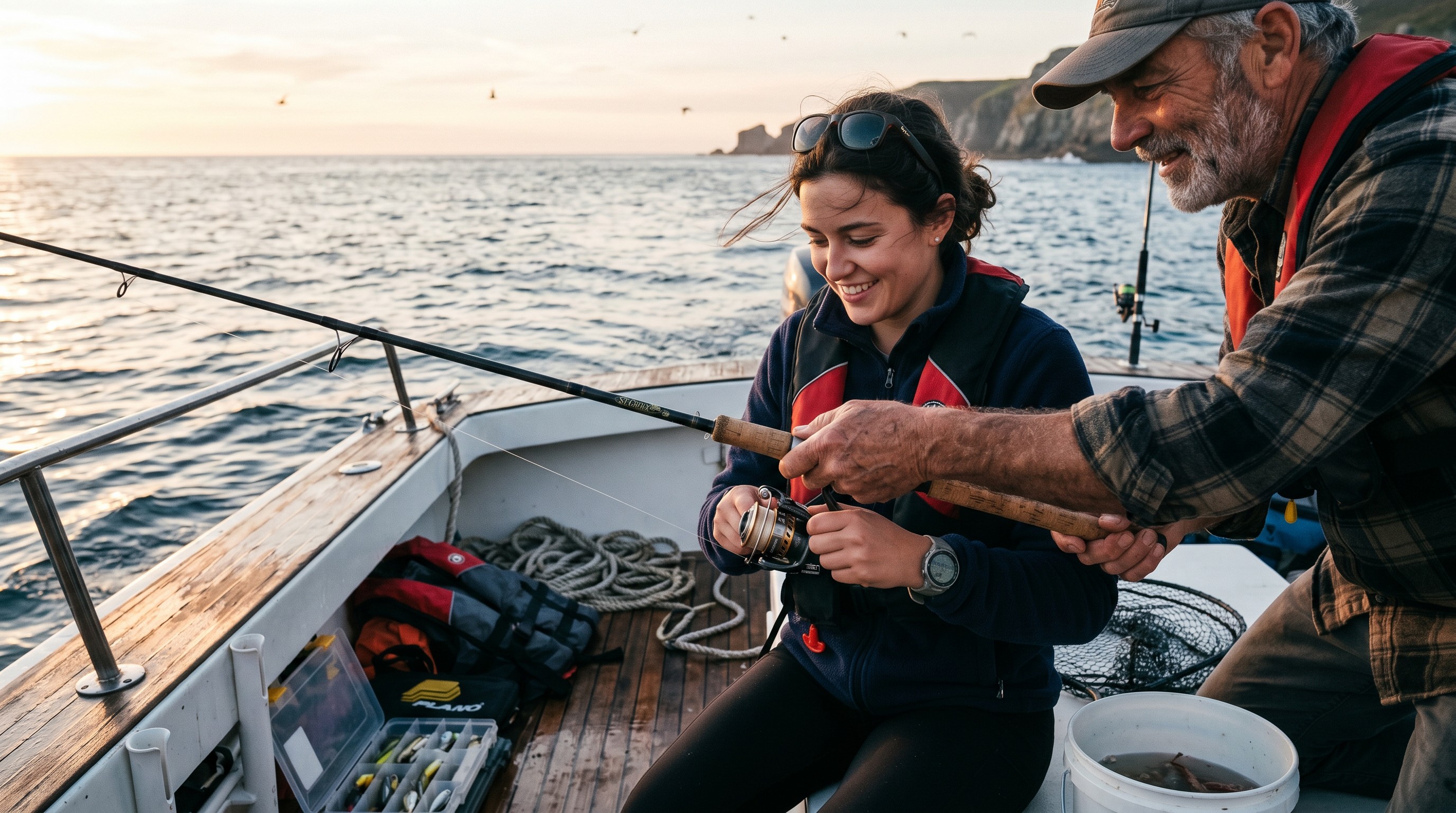
- Instruction on casting, dropping bait and setting the hook
- Help fighting, netting and handling fish
- Local knowledge about water conditions and fish behavior
Some operators also cover fishing licenses, fish cleaning, ice, drinks or rain gear, but never assume these are included. Ask about restroom access, fuel charges, lost-tackle fees and equipment sized for children before booking. Verify current license requirements, seasons, size limits and bag limits through the official state wildlife agency.
What Beginners Are Expected to Do
Arrive at the dock on time, wear secure footwear and listen closely during the safety briefing. The crew may ask you to hold a rod correctly, keep your line clear, bait a hook or move around the deck when another angler hooks a fish.
Follow directions around hooks, teeth and sharp fins. Let the crew demonstrate safe fish handling and proper catch-and-release technique. Most importantly, bring realistic expectations. A skilled captain can choose productive water and methods, but weather, water conditions and fish behavior mean no responsible charter can guarantee a catch.
Private Charter vs. Shared Charter vs. Party Boat
The best format depends on how much personal instruction, privacy and itinerary control you want. Before comparing prices, check the passenger limit, actual fishing time, included tackle and any extra charges directly with each operator.
| Format | Pricing structure | Instruction | Flexibility | Often suits |
|---|---|---|---|---|
| Private charter | One total rate for the boat, sometimes with fees for extra anglers | Usually the most individual attention | Often highest, within weather and legal limits | Couples, families and small groups |
| Shared charter | Per-person rate among unrelated guests | Moderate, depending on group size | Limited by the shared itinerary | Solo anglers and pairs |
| Party boat | Usually per person, with possible tackle rental charges | Less one-on-one coaching | Fixed departure, return and fishing plan | Budget-focused guests and larger groups |
Private Charters
A private charter reserves the boat for your party. That usually gives the captain more time to demonstrate casting, hook-setting and fish handling without dividing attention among unrelated guests. Families can often set a comfortable pace, and a small group may have more say in target species or fishing methods.
Private does not mean unlimited flexibility. Weather, distance, seasons, legal limits and the captain’s judgment still shape the trip. Because you are paying for the whole boat, the total cost is generally higher, but the per-person amount can become more competitive when several friends split it.
Shared Charters
A shared charter places solo guests, couples or small parties on the same boat. Everyone normally pays per person, making this format useful when you do not want to cover a private boat’s full rate.
The tradeoff is shared time and space. One guest may want light tackle while another prefers trolling, but the captain must choose a plan for the entire group. Ask how many passengers will fish, whether rods rotate, how catches are handled and what happens if the minimum number of guests is not reached.
Party Boats
A party boat carries more passengers and commonly follows a fixed schedule to established fishing grounds. Per-person pricing can make it an approachable first trip, especially for a solo angler. Some boats include a rod and reel, while others charge for rental tackle, bait, terminal gear or fish cleaning.
Expect less individual coaching and closer fishing positions. You may receive an assigned rail spot, so listen carefully when the crew explains line control and how to avoid tangles. Before booking, confirm passenger capacity, restroom access, seating, tackle costs and how much help first-time anglers receive. Also verify fishing license arrangements and current seasons, size limits and bag limits with the operator and the relevant official state wildlife agency.
How to Choose Your First Fishing Charter
Inshore, Nearshore, Offshore or Deep Sea Fishing
These labels vary by region, so ask the operator what they mean in actual miles, travel time and water conditions.
| Trip type | Typical experience | Main considerations |
|---|---|---|
| Inshore | Bays, rivers, flats and protected coastal water | Shorter runs, lighter tackle and generally less wave exposure |
| Nearshore | Coastal reefs, wrecks and open water relatively close to land | Moderate travel, changing conditions and varied techniques |
| Offshore | More distant reefs, wrecks or open-ocean grounds | Longer runs, heavier tackle and greater seasickness exposure |
| Deep sea | Often marketed for offshore fishing in deeper water | Confirm distance, depth and fishing time because the term is used loosely |
Inshore fishing often suits families and guests concerned about seasickness. It may involve casting light tackle around structure or drifting bait. Offshore and deep sea fishing can reach different target species, but the ride may be rougher and a large portion of the trip can be spent traveling.
Do not choose by species alone. Ask about expected wind, wave exposure, standing time and whether the technique involves constant casting, holding heavy tackle or waiting during long trolling passes.
Half-Day Fishing Trip or Full-Day Fishing Trip
A 4-6 hour half-day fishing trip is a practical starting point. It limits fatigue, sun exposure and seasickness while leaving enough time for instruction and several fishing stops, especially when productive water is close to the dock.
A full-day trip can provide access to farther grounds and more opportunities to adjust locations or methods. It also demands more food, water, weather protection and stamina. Compare dock-to-dock duration with estimated fishing time. An 8-hour offshore trip with a 2-hour run each way may provide about 4 hours on the grounds.
Questions to Ask Before Booking
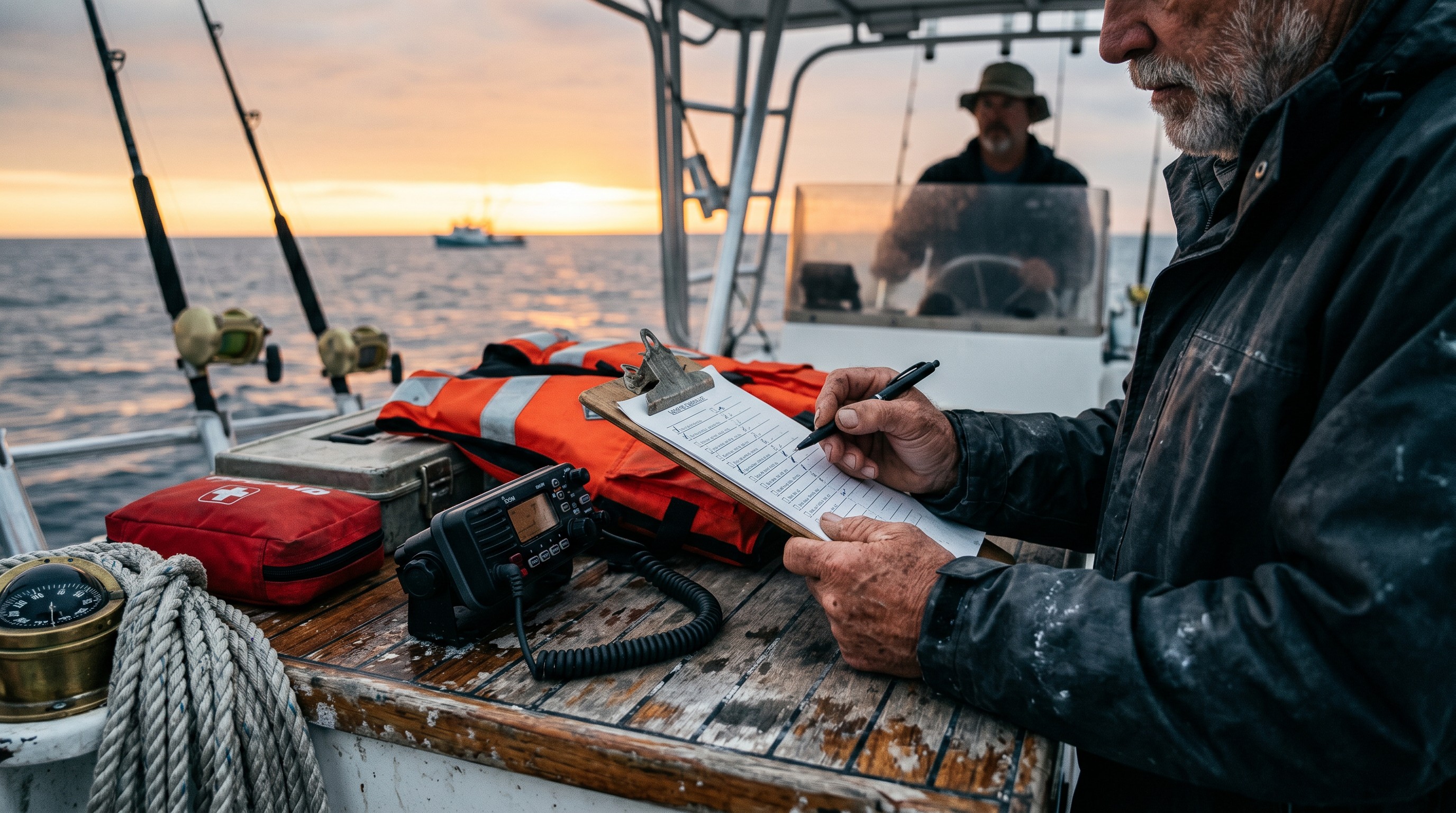
Use this checklist when speaking with the captain or booking staff:
- How long is the trip from check-in to return?
- How much travel time is expected each way?
- Which target species and fishing methods are realistic?
- Are the rod and reel, bait and tackle included?
- Will beginners receive casting, hook-setting and fish-handling instruction?
- What water conditions are typical for this route?
- Is there an enclosed restroom, seating and shade?
- What is the passenger limit, and how many guests will fish?
- Are children or guests with mobility limitations accommodated?
- What happens if weather changes the fishing plan?
Also confirm fishing license coverage and check current seasons, size limits and bag limits with the relevant official state wildlife agency.
Check the Captain, Boat and Booking Policies
Captain Credentials and Beginner-Friendly Instruction
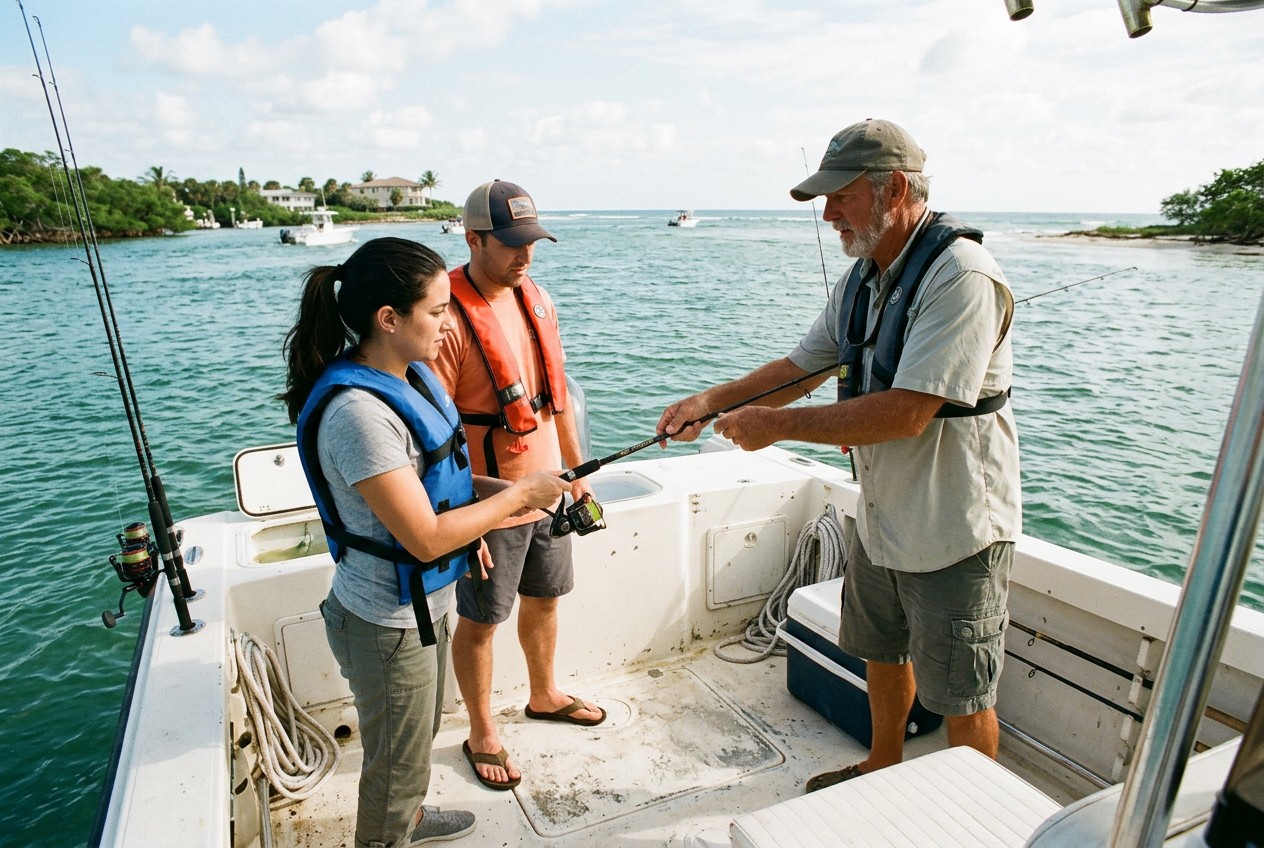
Ask the operator what captain credentials are required for the trip and whether the captain holds them. Also look for current local experience, not just years spent boating elsewhere. Recent charter reviews can reveal how patiently the crew works with first-time anglers, but confirm important details directly with the operator.
Ask how the crew teaches:
- Casting or dropping a rig
- Recognizing a bite and setting the hook
- Adjusting reel drag while fighting a fish
- Bringing fish within net or gaff range
- Safe fish handling and catch-and-release practices
A beginner-friendly captain should explain each step clearly and correct mistakes without creating unnecessary pressure.
Vessel Safety, Insurance and Accessibility
Before paying a deposit, ask whether the boat carries required safety and communication equipment for the planned waters. Each passenger should have an appropriate personal flotation device, including properly sized equipment for children. Confirm that the captain gives a safety briefing covering emergency procedures, movement around the deck and the location of safety gear.
Ask the operator whether the business and vessel carry appropriate insurance. If anyone in your group has limited mobility, discuss boarding steps, handrails, deck space, stable seating and restroom access. Do not assume a listing marked “family-friendly” can accommodate every child, older guest or mobility device.
Deposits, Weather and Cancellations
Read the full booking policy before entering your card details. Get clear answers to these questions:
- How much is the booking deposit?
- Is the deposit refundable or transferable?
- Who decides when weather is unsafe?
- Can the captain shorten or change the route?
- What happens if the operator cancels?
- Are guests offered a refund, credit or rescheduled date?
- What is the deadline for a guest cancellation?
- Are processing fees or service charges refundable?
Wind, lightning, rough water or mechanical problems can change a trip. A written weather cancellation policy should explain how those decisions affect your payment. Save the confirmation, receipt and policy version provided when you book, and verify any unclear terms directly with the operator rather than relying solely on a third-party listing.
Fishing Charter Costs, Tips and Possible Extras
What the Base Fare May Include
A charter’s advertised price often covers the boat, captain, crew, fuel, standard rod and reel setups, bait and basic tackle. Private charters commonly quote one boat rate for a stated number of passengers, while shared charters and party boats usually charge per person.
Read the inclusions carefully. Taxes, booking fees, fuel surcharges, extra anglers, equipment rentals and replacement costs for lost tackle may be separate. Fishing license arrangements also vary.
Total-Cost Checklist
Build the trip budget from the dock outward. A lower base fare may not remain the lowest option after transportation, tackle rental and cleaning charges are added.
| Cost item | What to confirm |
|---|---|
| Base fare | Trip length, passenger allowance and included services |
| Extra anglers | Per-person charge and maximum capacity |
| Taxes and booking fees | Amount due beyond the advertised rate |
| Fuel surcharge | Whether fuel is included or adjusted separately |
| Parking | Location, payment method and daily cost |
| Food and drinks | What is provided and what guests may bring |
| Optional gear | Rod rental, rain gear or specialized tackle |
| Fishing license | Whether the charter covers it or you must buy one |
| Fish cleaning | Per-fish, per-pound or flat-rate charge |
| Cold storage | Ice, bags, packaging and cooler requirements |
| Transportation | Rideshare, rental car, shuttle or lodging transfer |
| Cook-your-catch | Cleaning, preparation and restaurant service fees |
| Gratuity | Suggested practice and any included service charge |
Use a simple calculation:
Base fare + required fees + transportation + food + fish handling + gratuity = estimated trip total
Bring a card and some cash unless the operator confirms accepted payment methods. Dock parking, crew tips and fish-cleaning services may not use the same payment system as the charter office.
Charter Gratuity
A charter gratuity usually recognizes the captain and crew for preparation, instruction, baiting hooks, managing tackle, cleaning the deck and helping land fish. On crewed boats, tips may be pooled or divided according to the operator’s policy.
Many guests use 15-20 percent of the trip price as a reference for good service, but customs vary by region, boat type and crew structure. Ask whether a service charge is already included and who receives it. Tip for the quality of service and effort, not solely for the number of fish caught, since no crew can control weather or fish behavior.
What to Bring Fishing and How to Prevent Seasickness
Printable First-Charter Packing Checklist
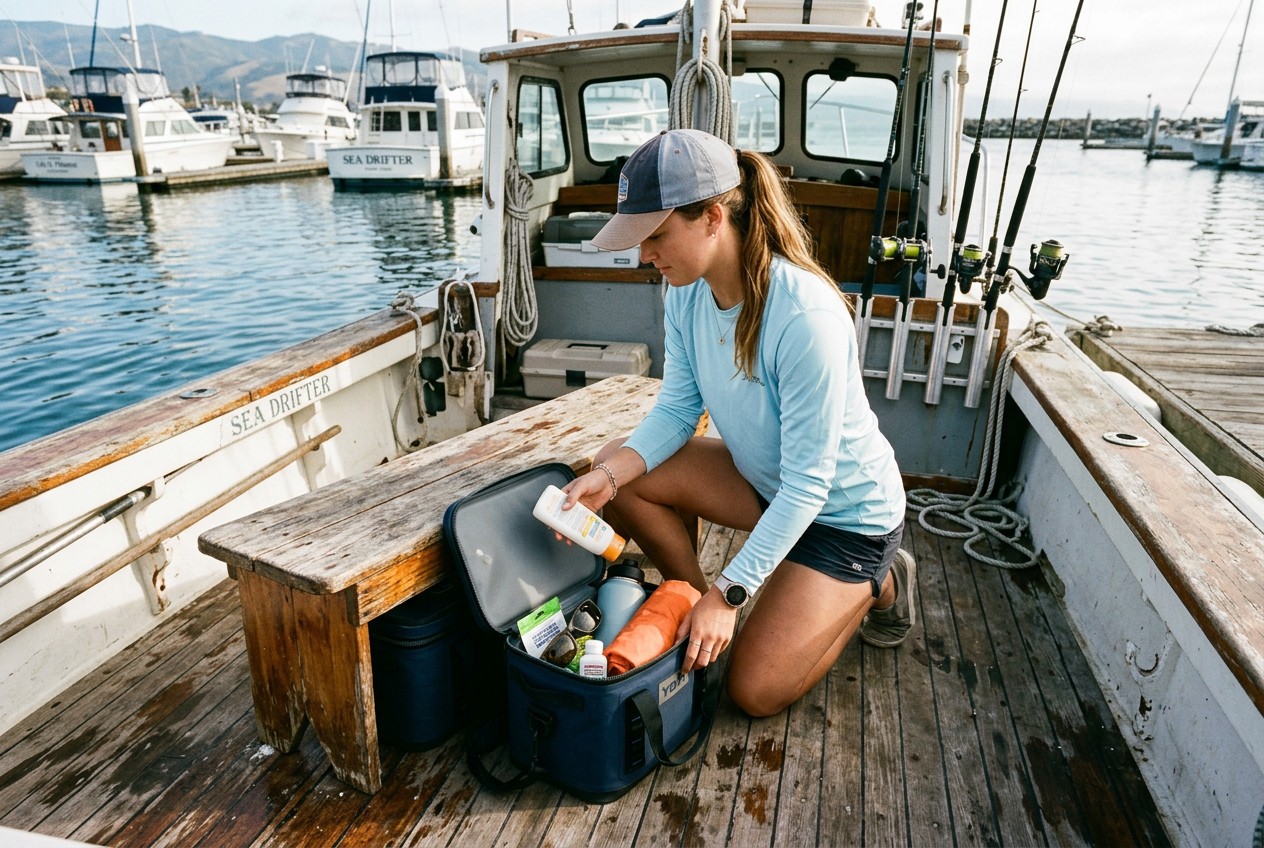
Pack light and use an operator-approved soft bag or cooler that can be secured out of the crew’s way.
- Non-marking, closed-toe shoes with good wet-deck grip
- Lightweight layers suited to the forecast
- Waterproof jacket or compact rain gear
- Broad-spectrum sunscreen, preferably lotion
- Polarized sunglasses with a retainer
- Brimmed hat with a secure fit
- Refillable water bottle and extra water
- Simple food such as crackers, sandwiches or fruit
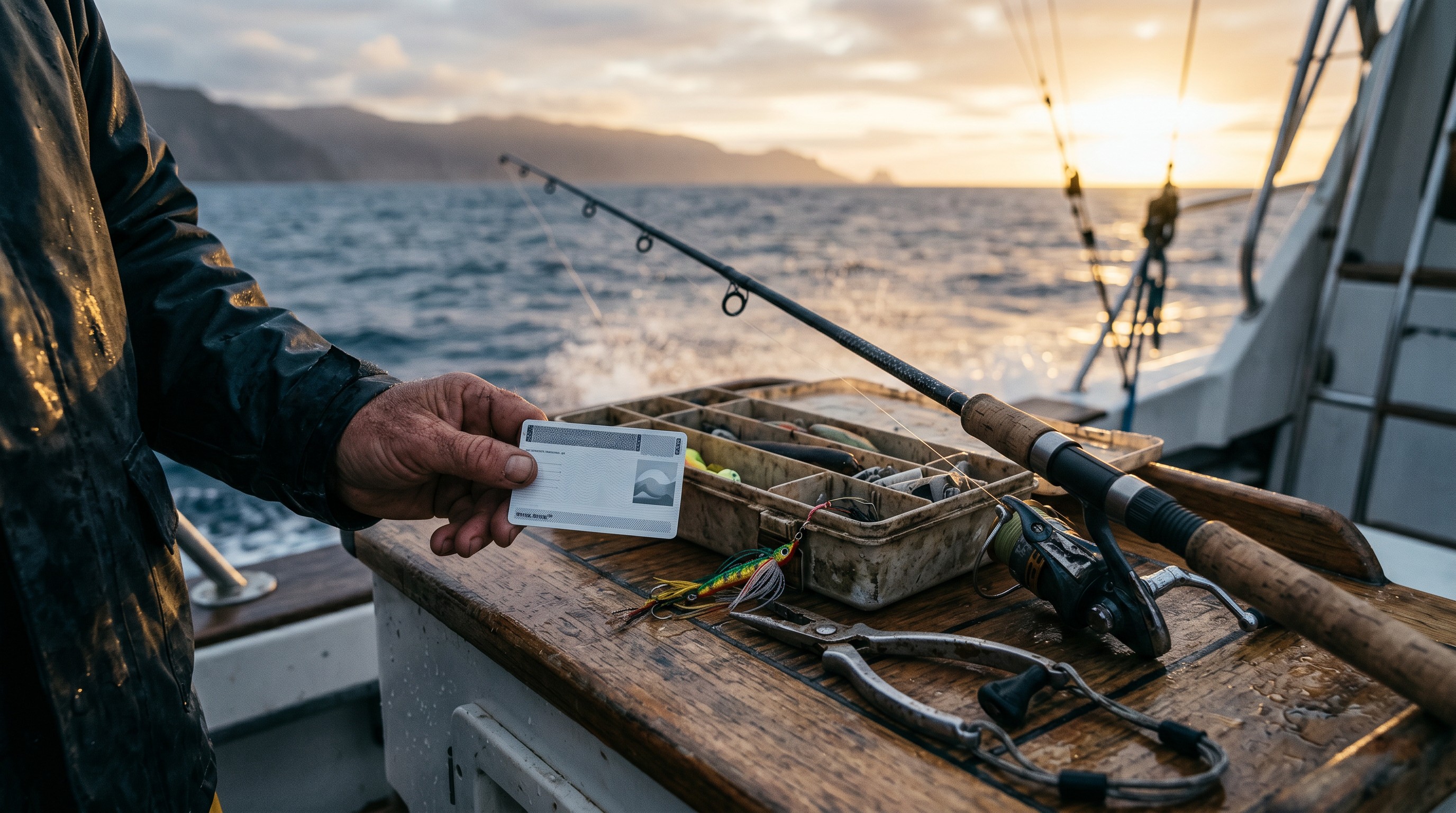
- Government-issued identification
- Personal medication in its labeled container
- Phone in a waterproof pouch
- Small towel and resealable bags for wet items
Ask before bringing a cooler. Storage space varies, and some boats provide ice or separate storage for cleaned fish. Confirm what food, drinks and containers are permitted.
Seasickness Prevention Before and During the Trip
Get a full night’s sleep and eat a light, low-fat meal before departure. An empty stomach can feel as bad as a heavy breakfast. Drink water, limit caffeine and avoid excess alcohol the night before and the morning of the trip.
Once underway, stay in fresh air and look toward the horizon instead of reading or staring at your phone. The boat’s stern or center often has less motion than the bow, although the best position depends on the vessel and sea direction. Ask the crew where to stand or sit.
If you are considering motion-sickness medication, discuss the product, dosage, side effects and timing with a clinician or pharmacist before the trip. Some options can cause drowsiness or interact with other medications.
Beginner Packing Mistakes to Avoid
Do not wear flip-flops, smooth-soled shoes or heavy boots that become slippery when wet. Leave unnecessary rods, tackle boxes and bulky bags at home unless the captain specifically asks you to bring them.
Avoid glass containers. Apply spray sunscreen on shore and away from rods, reels, bait and other passengers because overspray can create slippery surfaces and damage equipment.
Some captains discourage bananas due to fishing tradition, so ask before packing them. Also confirm approval before bringing a hard-sided cooler, since it may block walkways or exceed available storage. Check the operator’s packing rules and weather update the evening before departure.
What Happens on the Boat and After You Catch a Fish
From Dock Check-In to the First Cast
Arrive 15-30 minutes before the operator’s stated departure time. The crew will confirm your booking, collect any balance or paperwork, assign storage space and help everyone board safely.
Pay attention during the safety briefing. You should learn where personal flotation devices and emergency equipment are stored, how to move around the deck and where to sit while underway.
After reaching the fishing grounds, the crew will set up rods and explain the method. With light tackle, you may cast a lure, bait a hook or lower a weighted rig straight down. Ask for another demonstration if the reel, drag or hook-setting motion feels unfamiliar.
Landing and Handling Fish
When a fish bites, keep the rod pointed as instructed and reel steadily without forcing it. The captain or mate may adjust the drag, clear nearby lines and net the fish beside the boat.
Keep your hands away from exposed hooks, teeth, gill plates and sharp spines. Let the crew control unfamiliar species. For photos, support the fish properly and minimize time out of the water. If releasing it, follow the crew’s directions so it returns quickly and in good condition.
Licenses, Limits, Cleaning and Taking Fish Home
Before departure, confirm whether the charter covers your fishing license. These requirements vary by state, water and species.
Ask these questions before keeping fish:
- Is fish cleaning included or charged separately?
- Will the catch be filleted, bagged and placed on ice?
- Should you bring an approved cooler for the drive home?
- Is freezer storage available after the trip?
- Do nearby restaurants offer cook-your-catch service, and what preparation fees apply?
Keep fish cold from dock to kitchen. For longer drives, use plenty of ice and sealed packaging, and follow the crew’s guidance on safe transport.
Fishing Charter for Beginners FAQ
How Much Does a First Fishing Charter Cost, and How Long Should It Be?
Prices depend on location, boat size, trip length, private or shared format, fuel use and included tackle. Compare the complete cost, including booking fees, extra anglers, parking, fish cleaning and gratuity.
A 4-6 hour trip works well for many first-time guests. It provides time for instruction and several fishing stops without the fatigue of a full day. Ask how much of the trip is travel time. A longer offshore run may leave less fishing time than a shorter inshore trip.
Do I Need a Fishing License, and Should I Tip?
License requirements vary by state, water and charter type. Some operators cover passengers under the vessel’s license, while others require each guest to purchase one.
Gratuity customs also vary. Some guests use 15-20 percent as a reference for good service, but first ask whether a service charge is included and how tips are shared among the captain and crew.
What Is the 90 10 Rule in Fishing?
The 90 10 rule is an informal idea that roughly 90 percent of fish may occupy about 10 percent of the water. It is not a regulation, scientific guarantee or promise of success.
Fish gather where food, temperature, current, depth and cover suit them. A captain’s local knowledge helps narrow a large body of water to those productive areas.
Before departure, confirm the total price, actual fishing time, weather policy, license coverage, packing rules and meeting time. Then check the forecast, pack light and arrive early.
Safety: Follow the captain’s instructions and all applicable life-jacket requirements. Wear a properly fitted personal flotation device whenever directed and whenever your swimming ability, age or conditions make it prudent.
Fish handling: Do not handle unfamiliar fish, exposed hooks, teeth or spines without crew guidance. Some species can sting, bite, inject venom or contain toxins.
Food safety: Keep cleaned fish at 40°F (4°C) or below, prevent cross-contamination and follow current food-safety guidance during transport and preparation.
Consumption advisories: Check official local fish-consumption advisories for the specific water and species before eating your catch, especially for children and anyone who is pregnant, may become pregnant or is breastfeeding.
Sources and verification
- USCG life-jacket guidance supports checking approved, properly fitted flotation devices.
- National Weather Service marine forecasts provides official coastal and offshore forecast links.
- NOAA Fisheries fishing resources routes readers to federal permit information and official state fishing agencies.
These sources support the flotation, weather and regulation-verification context above. They do not validate an operator, vessel, trip inclusion, price, availability or fishing outcome; confirm those details directly.