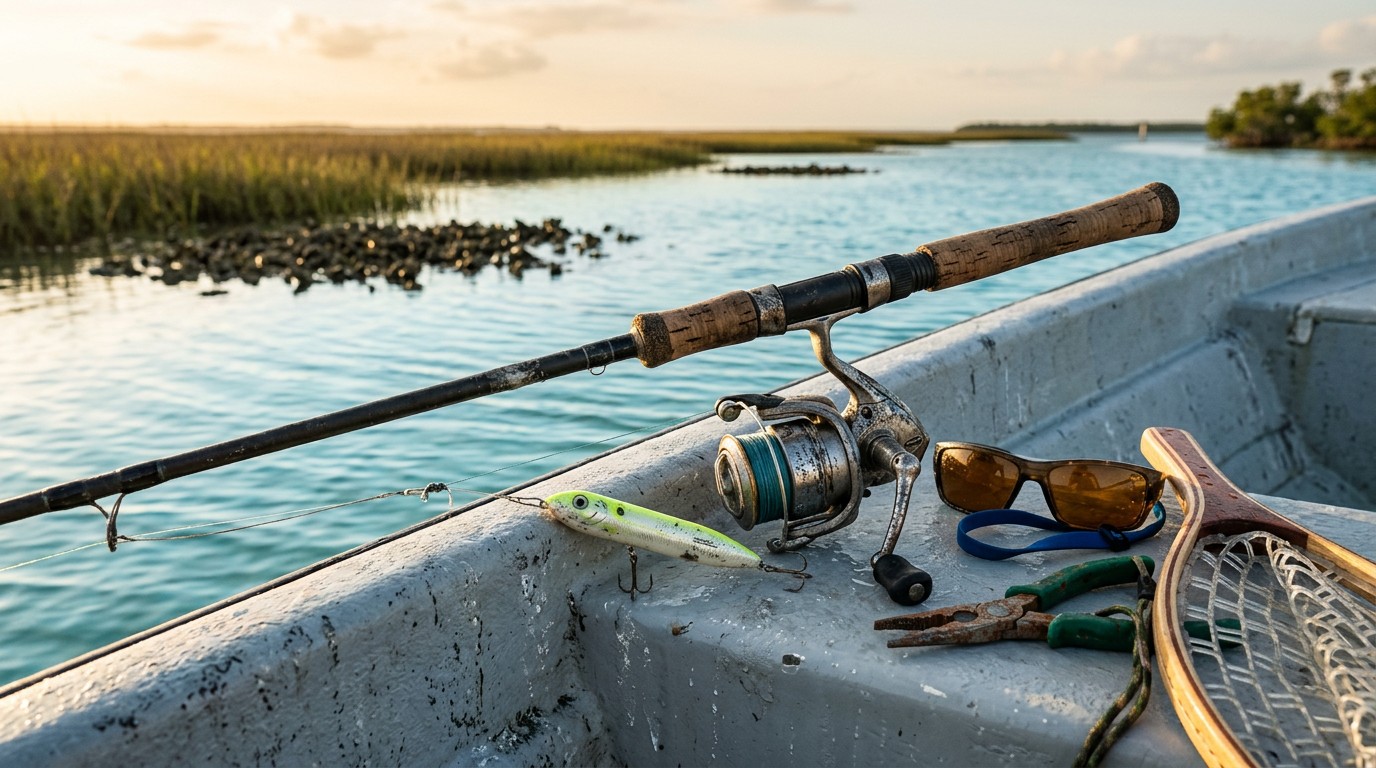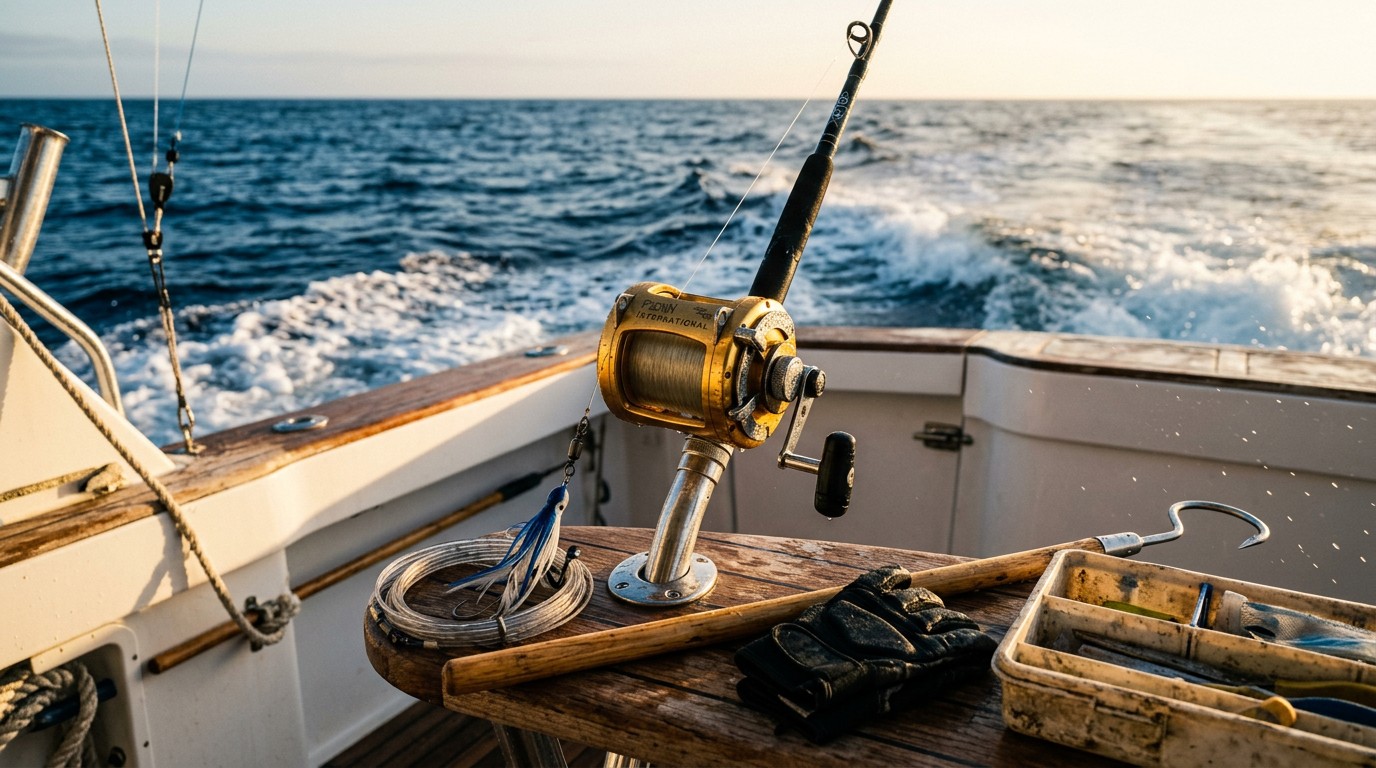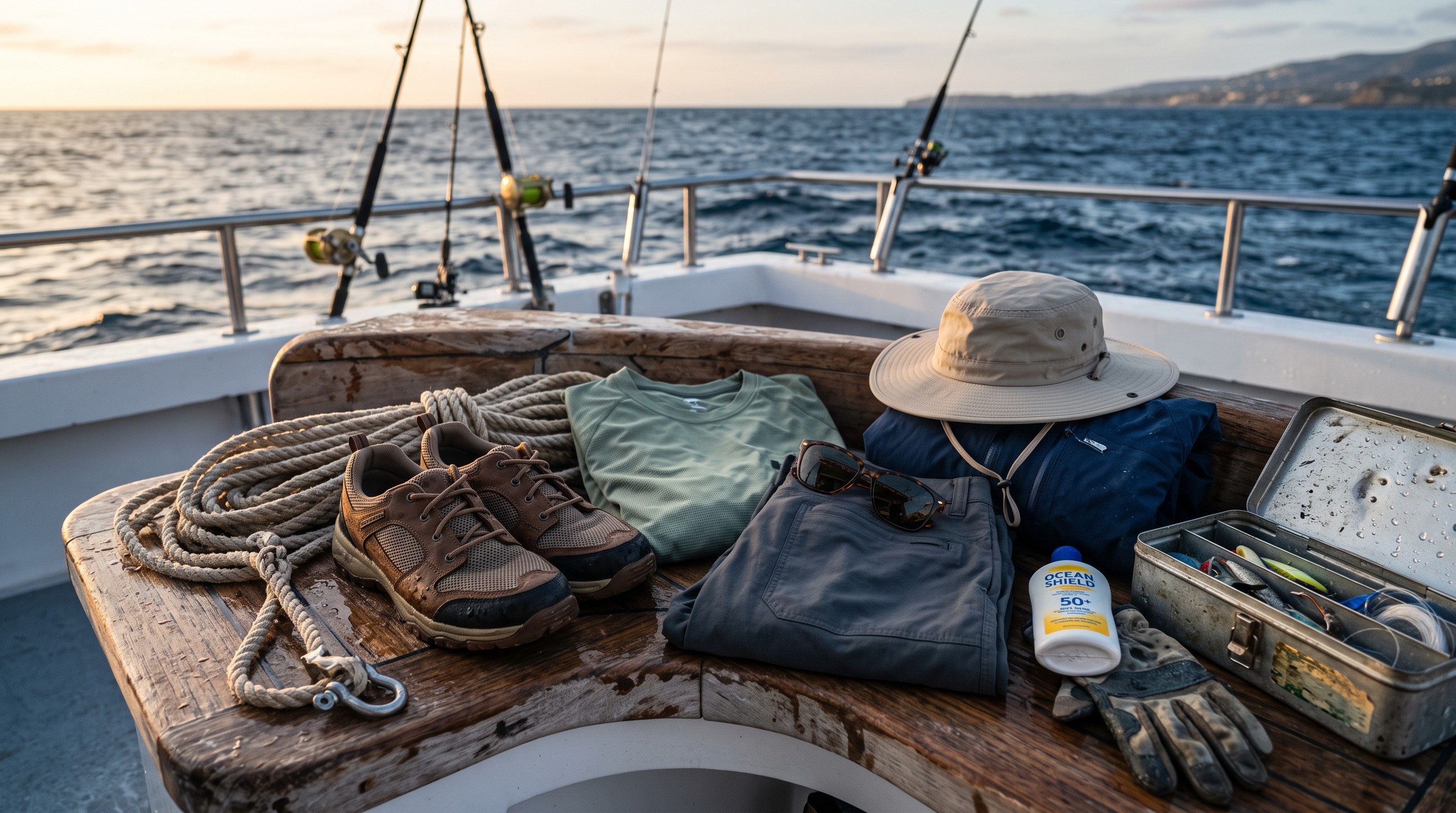
What to Wear on a Fishing Charter: The Quick Answer
Start with quick-dry clothing, grippy closed-toe shoes, reliable sun protection, and one packable layer for wind or rain. This simple setup handles most fishing charters without filling the boat with unnecessary gear.
The basic fishing charter outfit formula
Wear:
- A moisture-wicking shirt or lightweight UPF fishing shirt
- Quick-dry shorts or pants with secure pockets
- Closed-toe boat shoes with non-slip, non-marking soles
- Polarized sunglasses with a secure retainer
- A wide-brimmed hat or snug cap
- Broad-spectrum sunscreen
- A waterproof rain jacket or windproof outer layer
Adjust that formula for the trip. A 4-hour inshore charter on a warm, protected bay may call for shorts and a thin rain shell. A predawn offshore run can feel much colder because boat speed, wind, and spray strip away body heat. Bring an insulating layer even if the afternoon forecast looks comfortable.
Check the hourly weather forecast, not just the daily high. Ask the charter operator about deck footwear, available shelter, expected spray, and storage space. For longer trips, carry a complete change of clothes in a sealed dry bag. Conditions can shift quickly, especially offshore or on large lakes.
Fishing Charter Clothing for Every Weather Condition
Use the same core outfit, then add or remove layers as conditions change.
| Conditions | Wear |
|---|---|
| Hot and sunny | UPF shirt, quick-dry shorts or pants, hat, neck gaiter, polarized sunglasses |
| Cool | Moisture-wicking base layer, light fleece, quick-dry pants, wind shell |
| Cold | Thermal base layer, fleece mid-layer, waterproof outer layer, wool socks |
| Rainy or heavy spray | Waterproof rain jacket, waterproof bibs, quick-dry layers underneath |
| Windy | Snug hat, windproof jacket, long pants, neck gaiter |
Hot-weather fishing outfit
Choose lightweight quick-dry clothing that moves moisture away from your skin. A breathable long-sleeve UPF fishing shirt often feels better than a cotton T-shirt because it blocks direct sun while allowing sweat to evaporate. Loose, ventilated quick-dry pants also provide more coverage than shorts without adding much heat.
Wear a wide-brimmed hat or secure cap, a neck gaiter, and polarized sunglasses. Polarized lenses reduce surface glare, helping you see into the water while easing eye strain. Apply broad-spectrum sunscreen before departure and reapply according to the label, especially after sweating or getting sprayed.
The three-layer system for cool and cold weather
A simple three-layer system lets you adjust without packing bulky clothing:
- Base layer - A moisture-wicking shirt and leggings that keep sweat off your skin.
- Mid-layer - A fleece or light synthetic jacket that holds warm air.
- Outer layer - A waterproof or windproof shell that blocks spray, rain, and wind.
Add quick-dry pants, wool socks, and a warm hat for a cold-weather fishing outfit. Wool and synthetic fabrics retain useful insulation when damp. Cotton sweatshirts and jeans absorb water, dry slowly, and can leave you cold during a fast boat run.
What to wear in rain, wind, and heavy spray
Wear a waterproof rain jacket with an adjustable hood and cuffs. For steady rain, offshore spray, or an exposed Great Lakes trip, waterproof bibs protect better than rain pants because they cover your waist and lower back.
Under charter-provided foul-weather gear, wear a moisture-wicking base layer and thin fleece if temperatures require it. Avoid stuffing a heavy hoodie beneath the gear. Several breathable, removable layers provide warmth while preserving movement for casting, handling tackle, and stepping safely around the deck.
How Charter Type and Trip Details Change Your Outfit
Inshore, offshore, and deep sea fishing
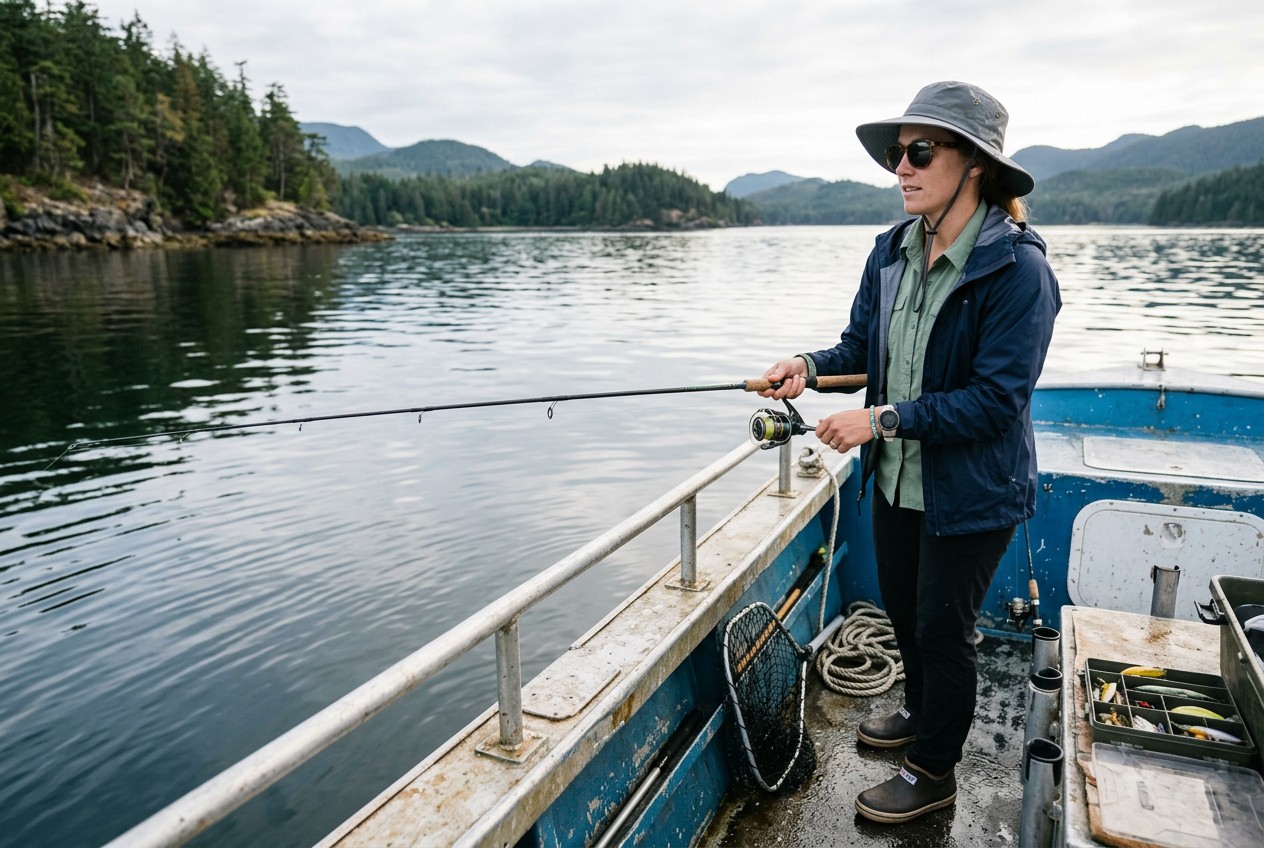
An inshore fishing charter often stays near protected bays, rivers, or shorelines, where runs are shorter and shelter is easier to find. Quick-dry clothing, non-slip shoes, sun protection, and a light rain shell usually form a solid starting outfit.
Offshore and deep sea fishing demand more protection. A boat running 25 mph creates steady wind even on a calm day, and open water may bring heavier spray with little shelter. Wear long quick-dry pants, a moisture-wicking shirt, and a windproof or waterproof outer layer. Add a fleece for cool mornings, then remove it once the air warms.
Freshwater, Great Lakes, and cold-water charters
Small lakes and rivers can look calm at the dock, but shoreline weather changes quickly. Bring a packable rain jacket and an insulating layer if thunderstorms, falling temperatures, or strong afternoon wind are possible.
Great Lakes and cold-water trips deserve extra caution. Cold water makes spray uncomfortable fast, while wind over the open lake can drop the temperature you feel well below the forecast air temperature. Wool socks, quick-dry pants, a fleece mid-layer, and waterproof bibs are sensible when cold spray is likely.
Departure time, trip length, and changing conditions
Predawn departures can feel 10-20 degrees colder than the afternoon high, especially during a high-speed run. Full-day trips also expose you to more sun, wind, and temperature swings than a 4-hour outing.
Check the hourly forecast for the dock and fishing area. Ask the charter operator about boat speed, available cabin space, expected spray, and how far offshore you will travel. For long or exposed trips, pack one extra warm layer and a complete change of clothes in a sealed dry bag.
Confirm current fishing licenses, seasons, catch limits, safety requirements, and access rules with the relevant official state wildlife agency and the charter operator before departure.
Safe Footwear and Clothing for a Wet Boat Deck
The best non-slip shoes for a fishing charter
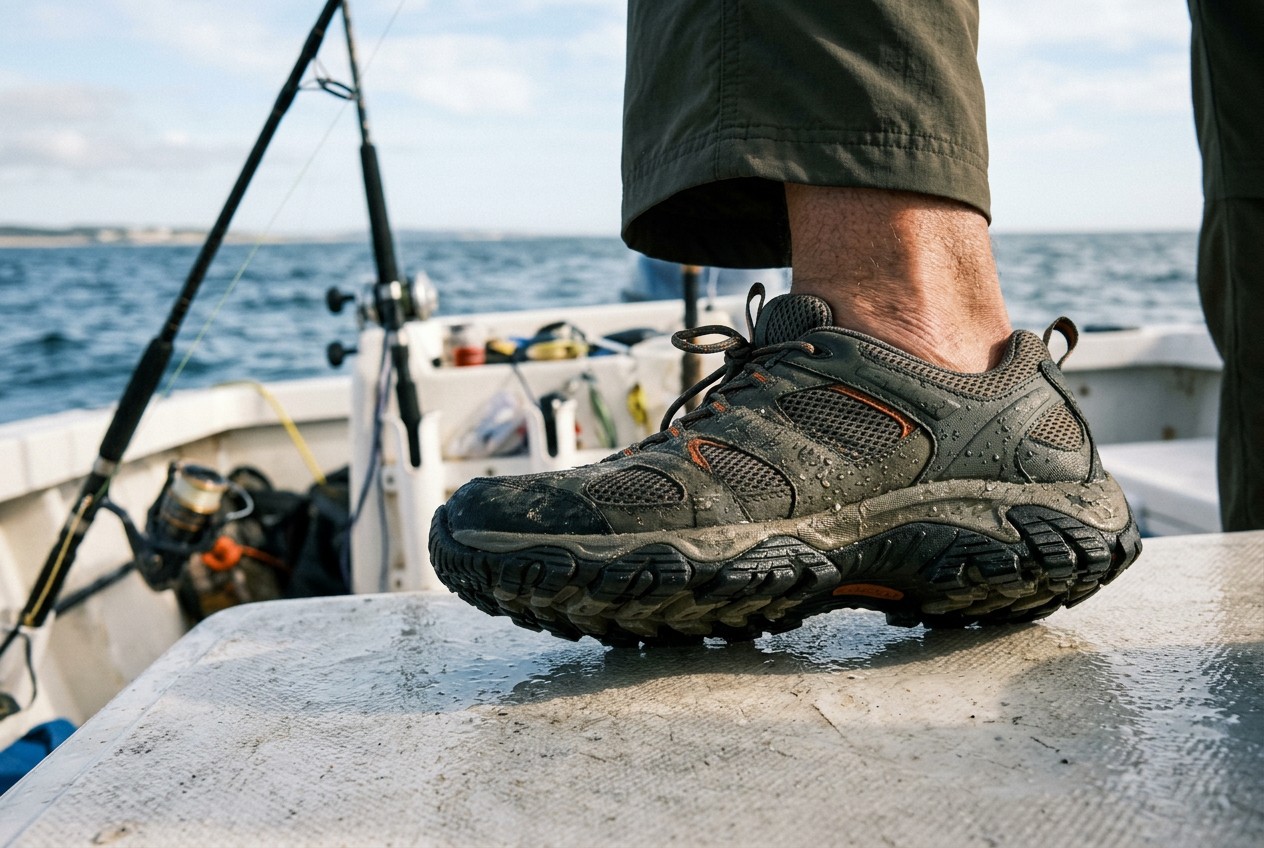
Choose secure, closed-toe boat shoes or athletic-style fishing shoes with grippy, non-marking rubber soles. A tread pattern that channels water away from the sole improves traction on wet fiberglass. Good drainage and quick-dry uppers also keep shoes lighter after rain or spray.
Avoid:
- Flip-flops and loose sandals that can slide or catch
- Heels or smooth-soled casual shoes
- Worn sneakers with little remaining tread
- Heavy boots that become waterlogged
- Bare feet, which offer no protection from hooks, fish spines, or dropped gear
Test your shoes before the trip. They should fit snugly without pinching and remain secure when you step sideways or brace against boat movement.
Deck safety, mobility, and operator rules
Keep clothing fitted enough that it cannot snag on rod holders, hooks, cleats, or moving tackle. Remove loose jewelry, tuck away hoodie cords, and secure sunglasses retainers and neck gaiters. Use thin, removable layers instead of one bulky garment that restricts movement.
If you have limited balance or mobility, ask about handrails, stable seating, step height, deck space, and seated fishing options before booking. Wear shoes that provide firm lateral support, and confirm that your layers allow a personal flotation device to fit correctly.
Some operators require non-marking soles or prohibit dark soles that can scuff the deck. Others may supply specific safety gear. Confirm footwear rules, accessibility arrangements, and personal flotation device requirements directly with the charter operator before departure.
Practical Clothing Advice for Women and Children
What women should wear on a fishing charter
Choose supportive, quick-dry clothing that stays secure while casting, bending, and moving across the deck. A practical outfit includes a moisture-wicking shirt, sports bra, quick-dry pants or shorts, and closed-toe shoes with non-slip soles. Add a UPF shirt, hat, polarized sunglasses, and a packable rain jacket.
Check the boat’s restroom setup before choosing waterproof bibs, overalls, or one-piece clothing. Bibs provide excellent protection from rain and spray, but they can be awkward in a compact marine toilet. Two-piece layers are often easier to manage.
Tie long hair back or use a braid and snug cap. Avoid loose scarves, dangling jewelry, wide sleeves, and unsecured accessories that may catch on hooks or tackle. A swimsuit under fishing clothes can be comfortable on hot trips or boats that include swimming, but it should not replace sun-protective clothing.
What children should wear
Dress children for more coverage and faster weather changes than adults may need. A useful outfit includes:
- A long-sleeve UPF shirt
- Quick-dry pants or shorts
- A secure hat with sun coverage
- Grippy closed-toe shoes
- A warm fleece or waterproof layer
- A properly fitted personal flotation device
Pack at least one complete spare outfit, including socks and underwear, in a sealed dry bag. Younger children may need two changes after spray, rain, spills, or motion sickness.
A personal flotation device must fit the child’s current size and remain secure when lifted gently at the shoulders. Do not place bulky clothing underneath unless the device still fits correctly. Ask the charter operator about provided safety gear, restroom access, minimum ages, required flotation devices, and participation rules before booking. State-specific boating and safety requirements can change, so verify current details with the relevant official state wildlife agency and the operator.
Fishing Charter Wear-versus-Pack Checklist
What to wear onto the boat
Start dressed for the forecast so you are not digging through gear while the boat is underway.
- Moisture-wicking or UPF fishing shirt
- Quick-dry pants or shorts with secure pockets
- Grippy, closed-toe shoes with non-marking soles
- Snug hat or cap
- Polarized sunglasses with a retainer
- Waterproof rain jacket or windproof shell
- Fleece mid-layer for cold mornings
Apply sunscreen before boarding. Keep the outfit comfortable enough for casting, bending, and bracing during a fast run. Ask the charter operator about footwear restrictions and expected spray.
What to pack in a dry bag
Use one compact dry bag rather than several loose bags that clutter the deck. A 10-20 liter bag is usually enough for personal clothing and essentials.
Pack:
- Waterproof rain jacket if you are not wearing it
- Thin fleece mid-layer
- Dry wool or synthetic socks
- Sunscreen and lip balm with SPF
- Neck gaiter
- Any motion sickness medication you normally use
- Complete change of clothes for the ride home
Seal the replacement shirt, pants, underwear, and socks inside a separate waterproof pouch or heavy-duty zip bag. Store your phone, wallet, medications, and car keys in another small waterproof pouch near the top. Bring only what you need, since storage space may be limited.
Common fishing charter clothing mistakes
Cotton is a poor choice for cold, rainy, or spray-heavy trips because it holds water against your skin. Jeans create the same problem - wet denim becomes heavy, stiff, and slow to dry.
Skip white clothing if bait, fish slime, sunscreen, or deck grime will bother you. Leave expensive watches, jewelry, designer sunglasses, and irreplaceable items ashore. Loose bracelets, dangling necklaces, hoodie cords, and wide sleeves can snag on hooks or tackle.
Do not wait until the boat leaves to think about motion sickness. If you use medication, follow its label and discuss timing or health concerns with a qualified medical professional. Bring a sealed spare outfit even when rain is unlikely. A dry shirt, pants, and socks can make the drive home considerably more comfortable.
Fishing Charter Clothing FAQ
Are shoes required, and can you wear jeans?
Most charters expect secure footwear, even if the operator does not publish a specific shoe rule. Wear closed-toe boat shoes or athletic-style fishing shoes with grippy, non-marking soles. Avoid bare feet, flip-flops, loose sandals, and slick soles on a wet deck.
Jeans are acceptable for a mild, reliably dry trip, but quick-dry pants are usually better. Denim absorbs spray and rain, becomes heavy, restricts movement, and stays cold for hours once wet.
What should women wear on a fishing charter?
A practical outfit includes a supportive sports bra, moisture-wicking shirt, quick-dry pants or shorts, and secure non-slip shoes. Add a UPF fishing shirt, polarized sunglasses, a snug hat, and a packable weather layer.
Tie or braid long hair so it stays clear of hooks and tackle. Before wearing bibs, overalls, or a one-piece outfit, ask about the boat’s restroom setup. Two-piece clothing may be easier in a small marine toilet.
What should you wear in rain or on a cold morning?
Start with a moisture-wicking base layer, then add a fleece mid-layer and waterproof or windproof outer layer. Wear waterproof bibs when steady rain or heavy spray is expected, plus wool or synthetic socks inside secure shoes.
Dress warmly for the run from the dock, especially before sunrise. Remove layers as the temperature rises to avoid sweating. Keep a complete dry outfit sealed in a dry bag for the ride home.
Always confirm current footwear rules, provided safety gear, personal flotation device requirements, and expected conditions with the charter operator before departure.
Boating safety: Clothing is not a substitute for a properly fitted, approved personal flotation device. Follow the captain’s instructions and all current local boating requirements.
Weather safety: Do not depart or remain on the water during lightning, severe storms, dangerous winds, or other conditions the charter operator or authorities consider unsafe.
Medication safety: Follow the label for any motion-sickness medicine. Some products cause drowsiness or interact with alcohol and other medicines; consult a pharmacist or qualified medical professional before use if you are pregnant, treating a child, taking other medication, or have a medical condition.
Sources and verification
- National Weather Service marine forecasts provides official coastal and offshore forecast links.
- National Weather Service lightning safety supports the lightning precautions above.
- CDC sun-safety guidance supports general sun-protection measures.
These sources support the weather, lightning and sun-safety context above. They do not validate an operator, vessel, clothing requirement, trip condition, price, availability or outcome; check the actual forecast and operator instructions for the trip.